Kleros Project Update 2026
A full insight into what's been happening in the Kleros Republic in 2025 and what's coming for 2026!
The Kleros Cooperative, the main entity currently developing the Kleros protocol, is a mission-driven organization focused on positive social impact, guided by four key pillars: justice inclusion, open-source technology development, open research, and education.
Let’s take a look at the landmark moments of the past year, organized around these pillars.
Research
The research team is led by Dr. William George. Over the past year, we have undertaken the following research activities:
Soulbound Tokens
We continued working on ways to use Soulbound Tokens (SBTs), digital credentials that represent skills or experience, to help select jurors in the Kleros Court in a secure and fair way. The goal is to make sure jurors are chosen based on relevant profiles, without opening the door to manipulation.
In this work, we studied methods that group jurors with similar credentials using algorithms, and tested how resistant these methods are to abuse. In particular, we looked at whether someone could game the system by trying to influence how groups are formed or by strategically staking tokens to target specific types of jurors.
William has published the following article in the Kleros Blog where he discusses these ideas: Research Topics in Juror Selection Part 2: Spectral Clustering Using Soulbound Tokens.
Peer Prediction
We studied new ways to reward and penalize jurors that better reflect how difficult a case is. Instead of always putting the same amount of a juror’s stake at risk, these approaches adjust the risk dynamically, using signals from how other jurors evaluate the case.
The goal is to make unclear or ambiguous disputes less risky for honest jurors, while keeping strong incentives in straightforward cases. This helps discourage “lazy voting” (voting without carefully reviewing the evidence) without relying on harsh, fixed penalties.
These ideas can be built into Kleros 2.0 through specialized dispute modules, and our results suggest they can maintain security while being fairer and more comfortable for risk-averse jurors.
"Peer prediction and Schelling-Point Oracles", a presentation by William on these topics at the EthCC[8] conference in Cannes, France. June, 2025.
Dispute Resolution for Number Valued Cases
We expanded our research on ways to resolve disputes with numerical outcomes, such as cases involving partial refunds or proportional insurance payouts. This work looks at how resistant different approaches are to manipulation, including how much influence a bad actor with significant voting power could have and how costly such attacks would be.
The goal is to ensure that these systems remain fair, reliable, and difficult to exploit, even in adversarial situations.
“Oracles for Number Values”, a presentation by William at the DevCon conference in Bangkok. November 2024.
AI and Decentralized Justice
We explored how artificial intelligence could take part in decentralized justice systems and began testing courts designed specifically for AI agents acting as jurors.
A key milestone was the launch of the Automated Curation Court, which uses rules and fees adapted for AI participation. Through a series of test cases, we observed how different AI tools responded to real questions and how their behavior interacted with the court’s incentives.
We also ran experiments in which past and current cases were reviewed by large language models acting as jurors, allowing us to compare their decisions with those made by human jurors.
"Building Ethical AI: Decentralized Justice for Aligning Artificial Intelligence with Human Values", a talk by Federico at the Ethereum France conference. July 2025.
Mirrorfall.ai: A proof-of-concept for image similarity disputes in IP contexts, providing fast, explainable reads from multiple AI models.
"Entre multitudes y algoritmos: justicia descentralizada en la era de la IA" a talk by Federico in Santiago's Legal Week. October 2025.
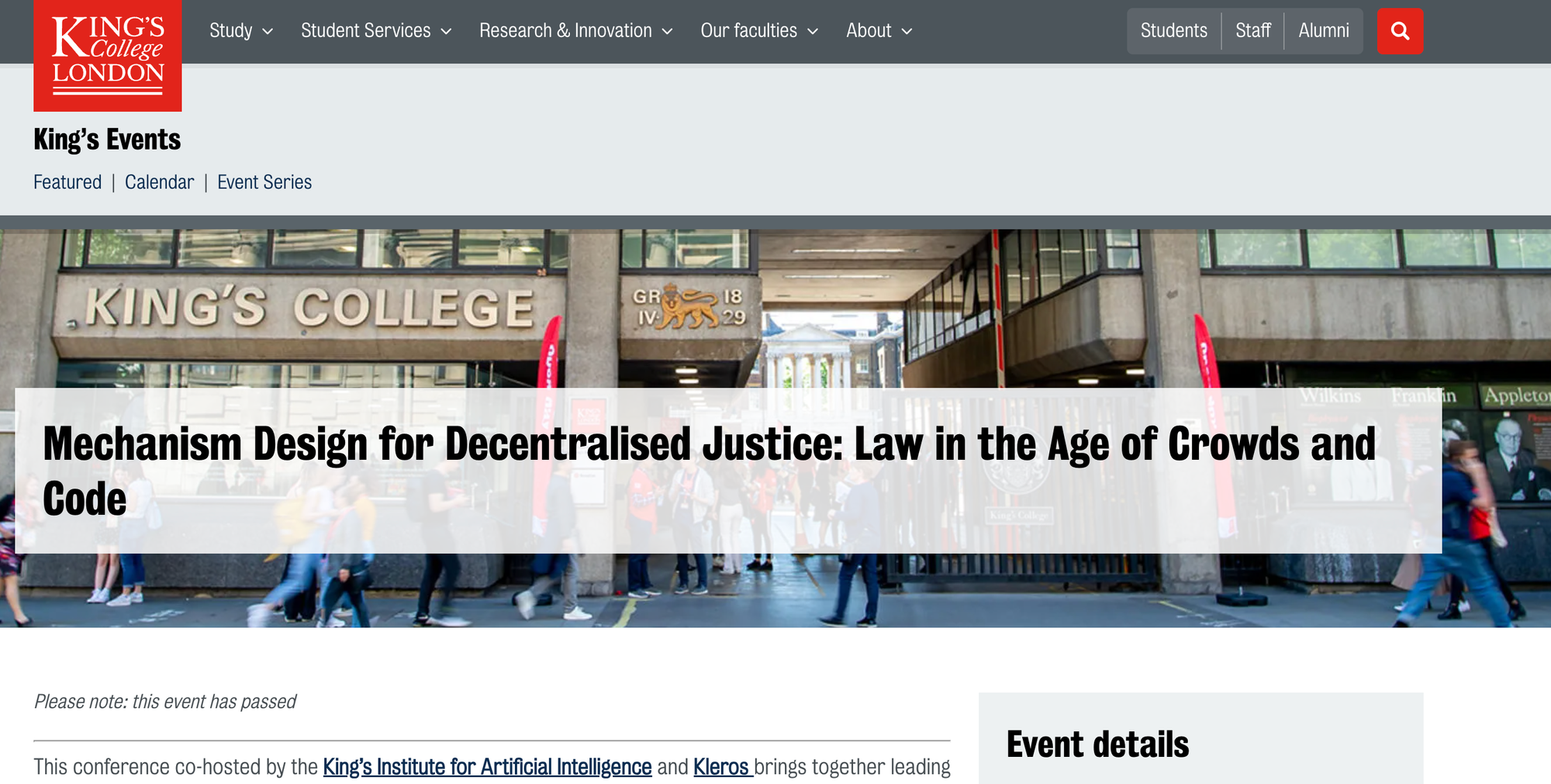
In collaboration with the King’s Institute for Artificial Intelligence, we co-hosted the conference “Mechanism Design for Decentralised Justice: Law in the Age of Crowds and Code” at King’s College London in April 2025. The event brought together researchers from diverse fields relevant to decentralized justice, including peer prediction, social choice theory, artificial intelligence, blockchain-based identity mechanisms, and law.
See here the full playlist of the talks.
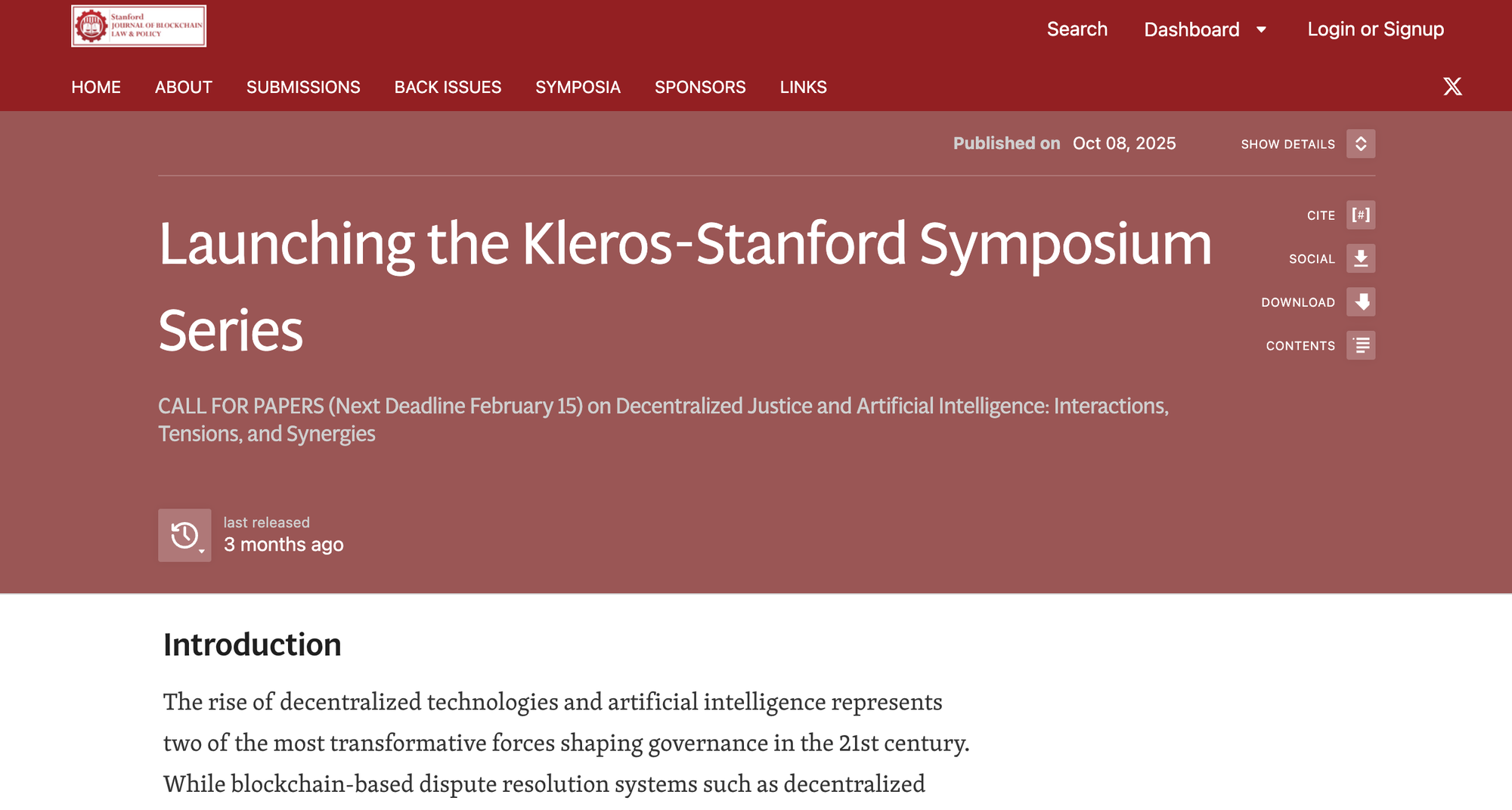
Kleros has also entered a partnership with the Stanford Journal of Blockchain Law & Policy. As part of this partnership, a call for papers was launched for the Kleros-Stanford Symposium Series: “Decentralized Justice and Artificial Intelligence: Interactions, Tensions, and Synergies”.
During 2025, we entered into high-level academic partnerships, including the sponsorship of two doctorate students at the University of Oxford (one in computer science and one in law). At the same time, we saw other students who started their work on decentralized justice years before defend their dissertations. These are the early stages of the formation of a new research community.
Ekin Genc is doing his doctorate at Oxford Faculty of Law, supported by Kleros.
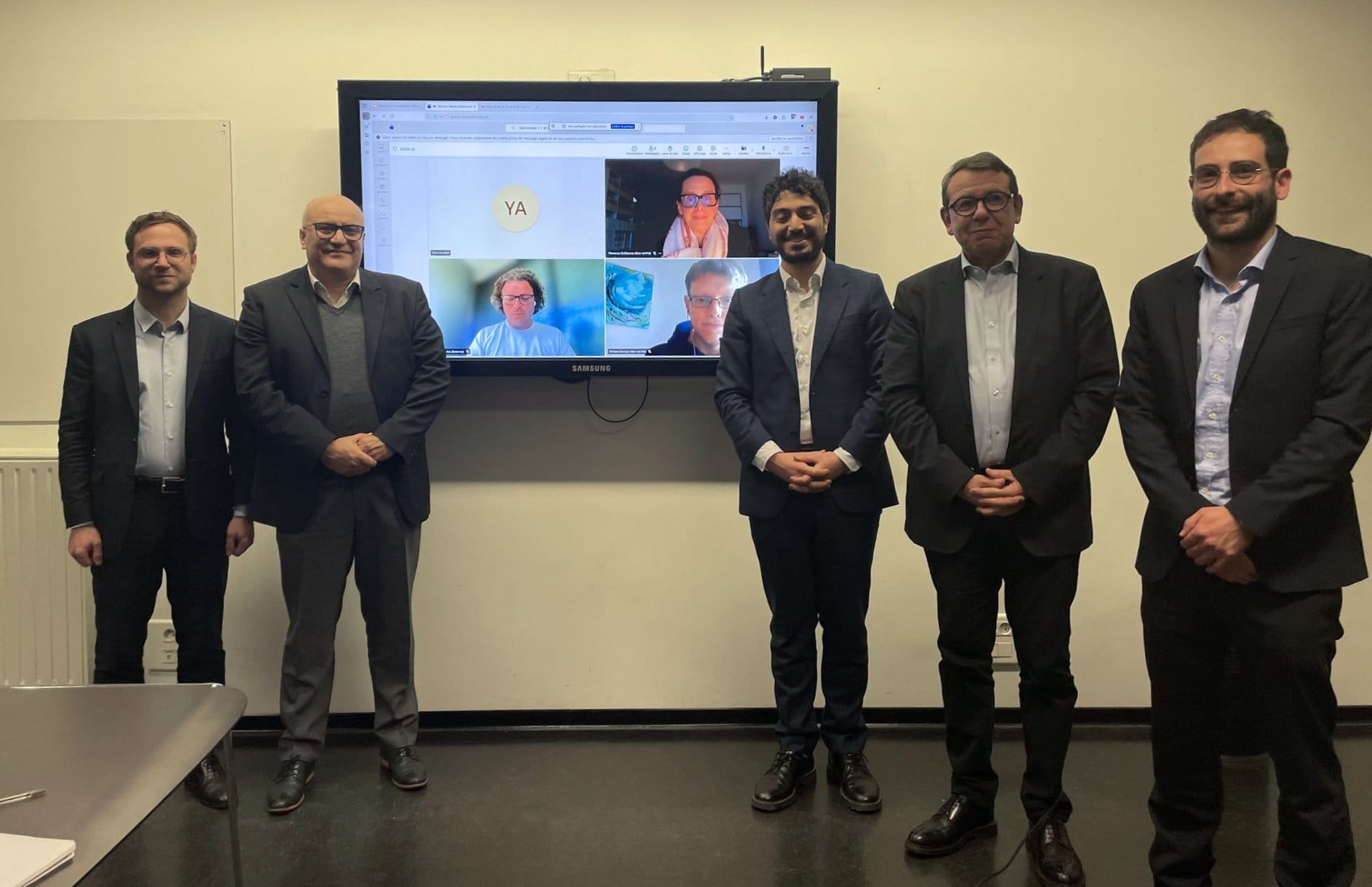
Thrilled to have been on the examination panel for the PhD thesis “Transforming Legal Systems with Blockchain: Kleros as Decentralized Dispute Resolution” by Alesia Zhuk at Pompeu Fabra University.
— Federico Ast (@federicoast) March 21, 2025
Alesia produced an excellent interdisciplinary dissertation, integrating elements… pic.twitter.com/MvKZOmxxGw
Federico served on the PhD examination panel of Alesia Zhuk, who defended her dissertation titled “Transforming Legal Systems with Blockchain: Kleros as Decentralized Dispute Resolution” at Pompeu Fabra University in March 2025.
Articles, Journals and Books
Kleros’ strong academic footprint has led to numerous references across articles, journals, and even books. The following are some examples from 2025.
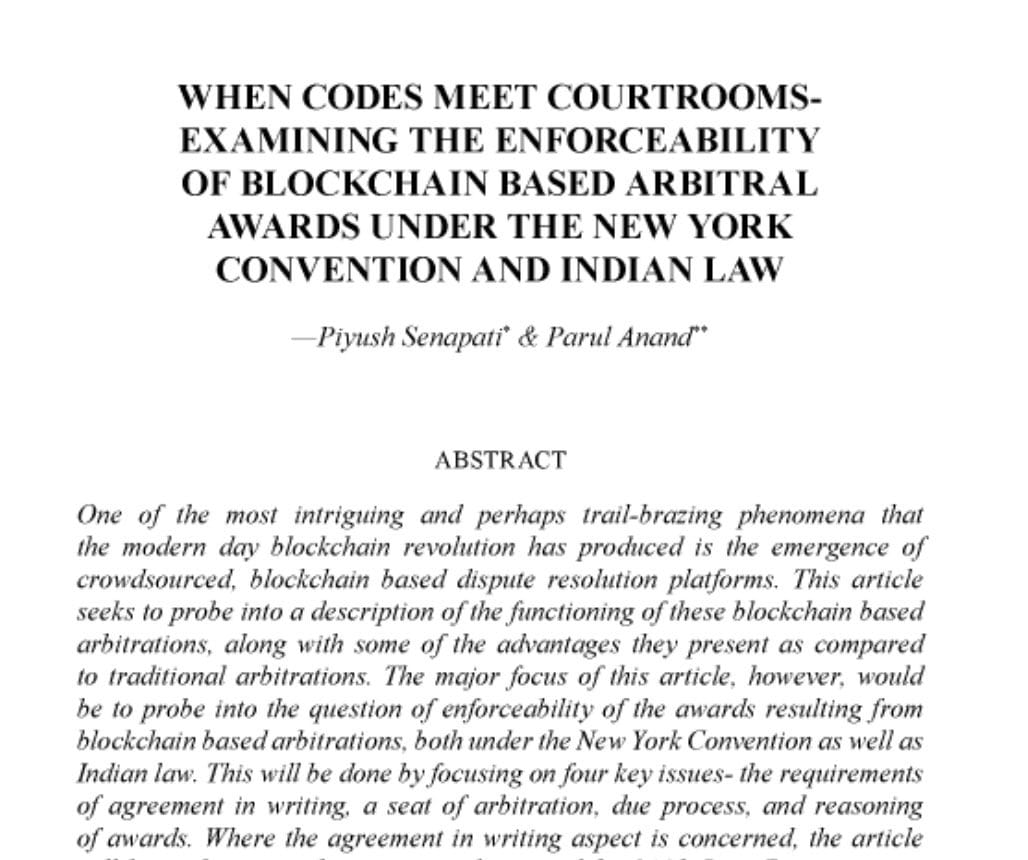
- When Codes Meet Courtrooms – Examining the Enforceability of Blockchain-Based Arbitral Awards under the New York Convention and Indian Law by Piyush Senapati and Parul Anand (Indian Arbitration Law Review)
- How to Arbitrate Disputes over Cryptocurrency and More by John R. Van Winkle
- From Code to Court and Beyond: Alternative Dispute Resolution On and Off the Blockchain by Jennifer Huang and Brendan Harrington (Dispute Resolution Journal)
- The Future of Commercial Arbitration: Blockchain (Journal of Law, Policy and Globalization)
- Trademarks on the Blockchain: NFT Domains and Collisions by Jelena Laketić (Michigan Technology Law Review)
- The Elephant in the Room: A Global Mechanism for E-Sport Disputes by Serkan Kaya, Dr. Eda Sahin-Sengul, and Aybüke Keskin (Computer Law & Security Review)
- Dispute Resolution in Smart Contracts According to Their Self-executing Feature by Sahar Karimi (Legal Research Quarterly Journal)
- Transforming Arbitration: Exploring the Impact of AI, Blockchain, Metaverse and Web3, edited by Maud Piers and Sean McCarthy
- A Research Agenda for Online Dispute Resolution for DLT Finance by Pietro Ortolani
- Legal and Ethical Challenges in International Cybersecurity: Addressing Cross-Border Data Breaches by Siti Mariam (Journal of Advances in Cybersecurity Science)
- Smart Arbitration in the Service of Cybersecurity (Algerian and Comparative Public Law Journal)
- A Survey of Blockchain Applicability, Challenges, and Key Threats by Catalin Daniel Morar and Daniela Elena Popescu (Computers, MDPI)
- A Revolução da Arbitragem pelo Blockchain e sua Aplicação nos Litígios Imobiliários: o Modelo da Plataforma Kleros e a Possibilidade de Atuação de Notários e Registradores by Lucas Furlan Sabag
- LOCATION, LOCATION, LOCATION! VIRTUAL REAL ESTATE DISPUTES IN THE METAVERSE AND BLOCKCHAIN DISPUTE RESOLUTION by Ana Mercedes López Rodríguez (Willamette Journal of International Law and Dispute Resolution)
- Toward Trustworthy Content: The Role of Challengers, Juries and Veracity Bonds in Digital Media Platforms by Lucas Barbosa, Sam Kirshner, Rob Kopel, Eric Tze Kuan Lim and Tom Pagram (Industrial Management & Data Systems).
"Decentralised Justice: A Future of Commercial Arbitration", a talk by Federico at The University of Manchester, May 2025.

The Kleros Fellowship of Justice
The Kleros Fellowship of Justice program is still going strong. In December 2025, the 9th batch started.
Some of the research reports presented during 2025 include:
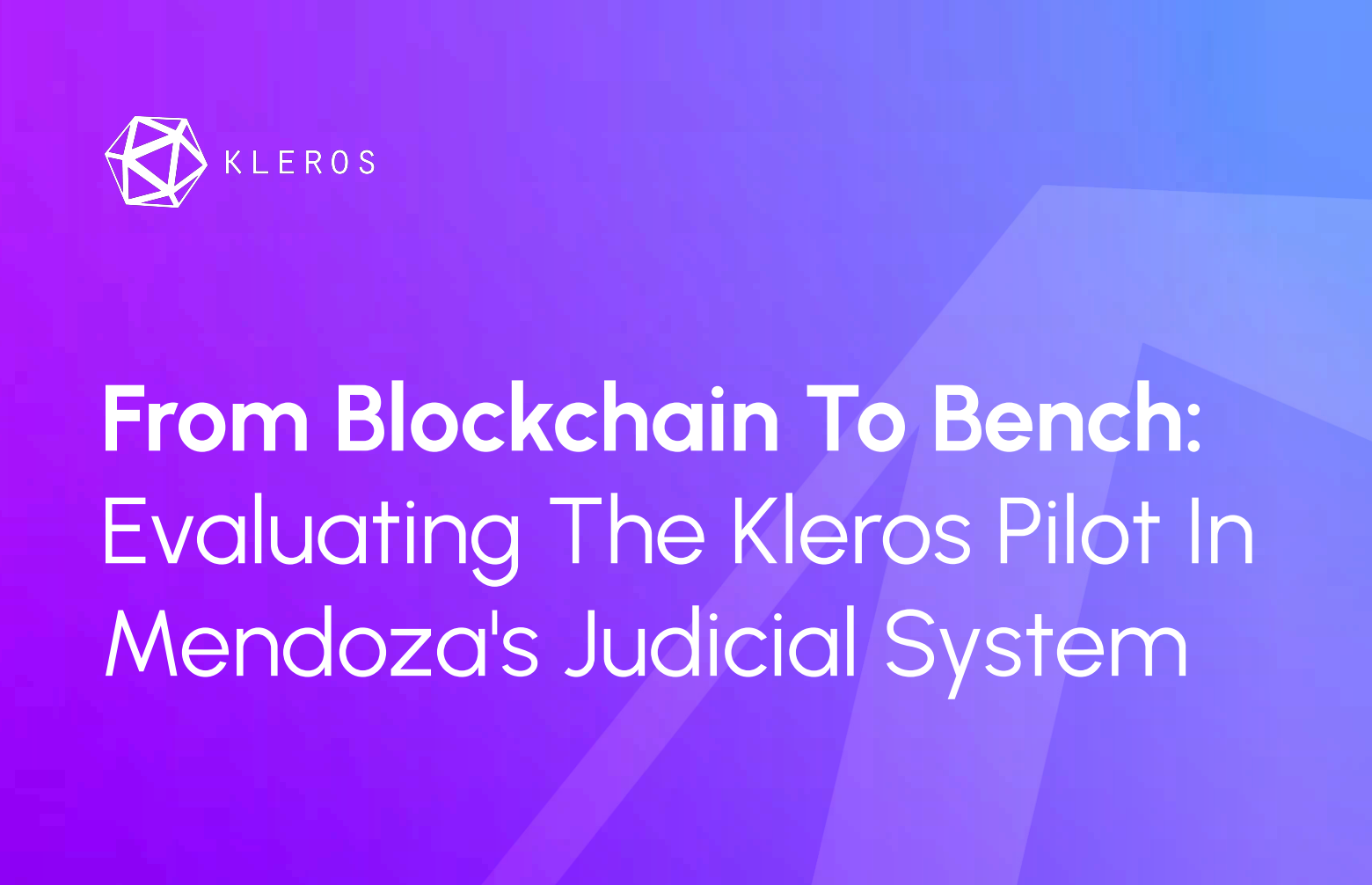
- "From Blockchain to Bench: Evaluating the Kleros Pilot in Mendoza's Judicial System" by Florencia Brusco.
- "Application of Kleros' Decentralized Dispute Resolution Technology To Conflicts Arising From Tenancy Agreements" by Mora Tapia Gómez.
- "Legal Viability of Decentralized Justice in the Dominican Republic: Application of Kleros in Different Economic Sectors" by Gabriela and Julio Féliz Guerrero.
- "Introducing Kleros & Blockchain Technology in the Real Estate Transactions from Spain" by Guenter Schramm Tronca.
Business Development
In 2025, Kleros experienced a strong year for product integrations, expanding its visibility across two primary segments: Enterprise and Web3.
Kleros Enterprise
Kleros Enterprise, which targets mainstream use cases, has been the primary driver of growth. Key sectors within this segment include fintech, insurance, and government.
The integration with fintech company Lemon remains strong, with nearly 120 cases processed to date and high levels of customer satisfaction. This is setting a benchmark for Kleros adoption within banks and fintechs.
Kleros significantly expanded its public sector presence by piloting dispute resolution programs with different jurisdictions. In the Lavalle department of the Mendoza Province, three official cases were conducted through the Kleros Court, a pioneering initiative supported by the Mendoza Supreme Court to address consumer and neighborhood disputes.
An agreement along similar lines was signed with the city of Junín, enabling its Consumer Protection Office to use Kleros as an alternative dispute resolution mechanism for local cases, resulting in nearly 15 cases being resolved.

"Decentralized Justice in Action The Kleros - Mendoza Supreme Court Pilot". Federico Ast, Facundo Trotz and María Fernanda Díaz discuss how Kleros is being piloted in Mendoza’s judicial system as a fast, transparent “jury opinion” layer for small consumer and neighborhood disputes. November 2025.

Regulatory Evolution
In August 2025, Resolution No. 893/2025 was issued by the Subsecretariat of Consumer Protection and Fair Trade, updating the legal framework governing the Consumer Ombudsman.
This update allows for private individuals or entities that meet specific legal and technical requirements (and that are accepted by the government) to serve as ombudsmen and handle cases for companies that voluntarily opt into their services. If the consumer accepts the ruling, the decision becomes legally binding.
This represents a significant milestone, granting Kleros legal force comparable to that of traditional court decisions. This creates a strong incentive for companies to opt into this system for saving in legal costs.
Our policy writer, Facundo Trotz, explaining Resolution No. 893/2025 in our weekly community call.
Futarchy
Since its early days, Kleros has been a pioneer in governance innovation. Recently, there has been growing interest in futarchy, a governance model that uses prediction markets to help guide decisions.
Instead of voting directly on policies, participants place bets on which option they believe will lead to better outcomes. The resulting market prices reflect the collective expectation of what is most likely to work.
Futarchy fits naturally with Kleros by providing a way to resolve disputes when prediction market outcomes are contested. In such cases, Kleros jurors can be called upon to adjudicate the disputed questions.
Building on this idea, we have begun developing a futarchy platform that other projects can integrate into their governance systems. This will allow DAOs and protocols to use prediction markets for decision-making, while relying on Kleros for decentralized and trust-minimized dispute resolution when disagreements arise.
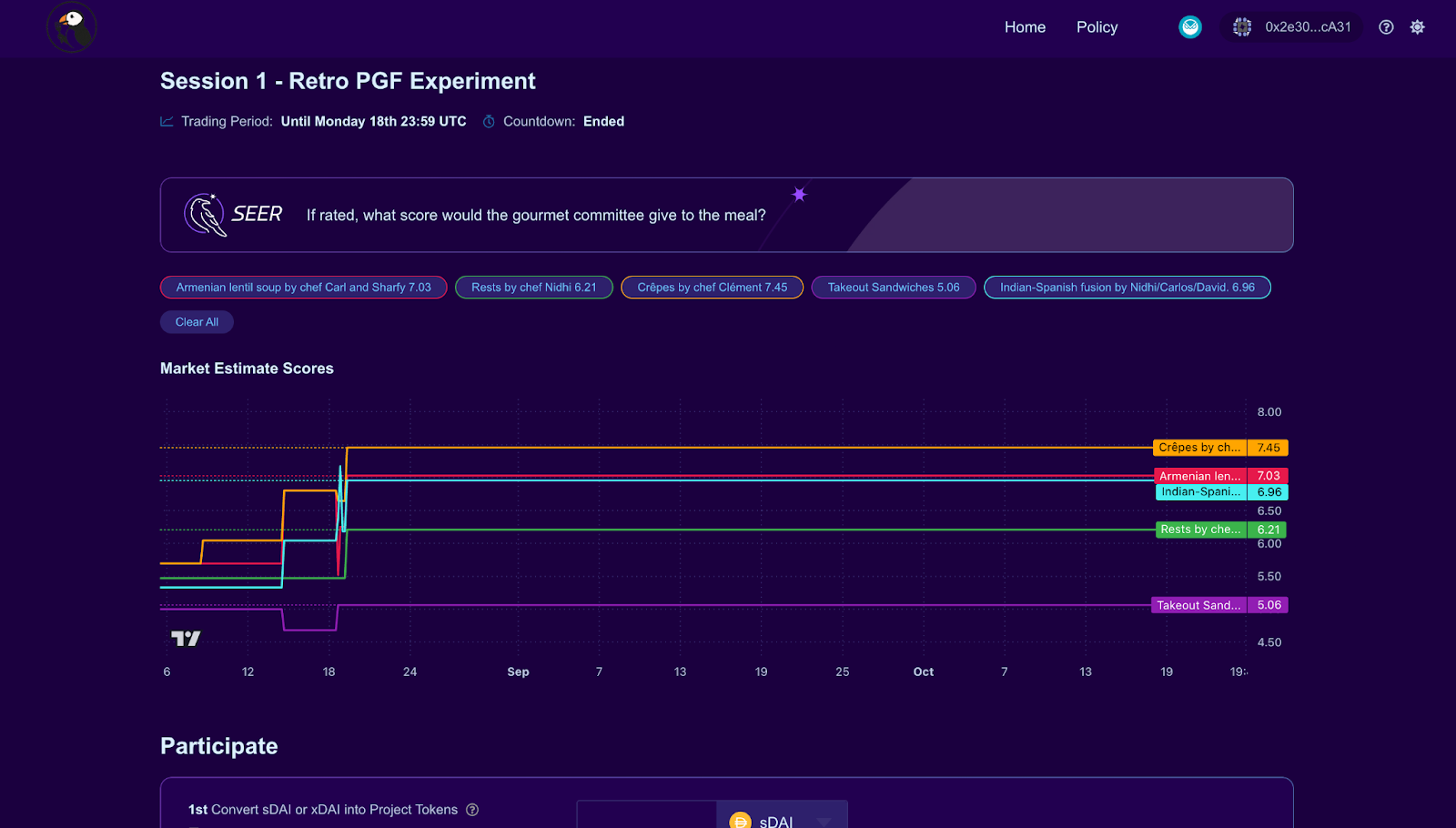
The creator of prediction markets and futarchy, Robin Hanson, interviewed by Federico in the Decentralized Justice Broadcast.
Marketing and Communications
During 2025, we undertook a range of marketing and communications activities aimed at strengthening the Kleros brand, raising awareness of decentralized justice, and generating interest in potential integrations. Kleros team members also continued to present at various industry conferences.
In parallel, the community and independent media outlets have increased the visibility of Kleros across diverse audiences. Below are some examples.
Kleros, una aplicación de blockchain que resuelve problemas del mundo real.
— Federico Ast (@federicoast) February 19, 2025
Ayer, en la TV argentina. 🇦🇷🇦🇷🇦🇷 pic.twitter.com/YmjGXsEYJX
A mention of Kleros on Argentinian TV. February 2025.

Gran sesión de grabación del podcast Experiencias Austral con Javier García Sanchez y Lorena Vilanova en el @IAE_Austral.
— Federico Ast (@federicoast) March 20, 2025
Conversamos sobre la economía blockchain que se viene y cómo va a interactuar con la IA y otras tecnologías exponenciales! pic.twitter.com/SMCiBDsISC
Experiencias Austral podcast, IAE Business School Universidad Austral. March 2025.
Federico at the "Future Consumer ADR" podcast of the American Arbitration Association. September 2025.
Kleros is in the house for the 25th International Forum on Online Dispute Resolution at London. 🇬🇧
— Federico Ast (@federicoast) April 29, 2025
Come speak with me for all things regarding the decentralised justice movement! pic.twitter.com/yrveveqwi2
25th International Forum on Online Dispute Resolution at London. April 2025.

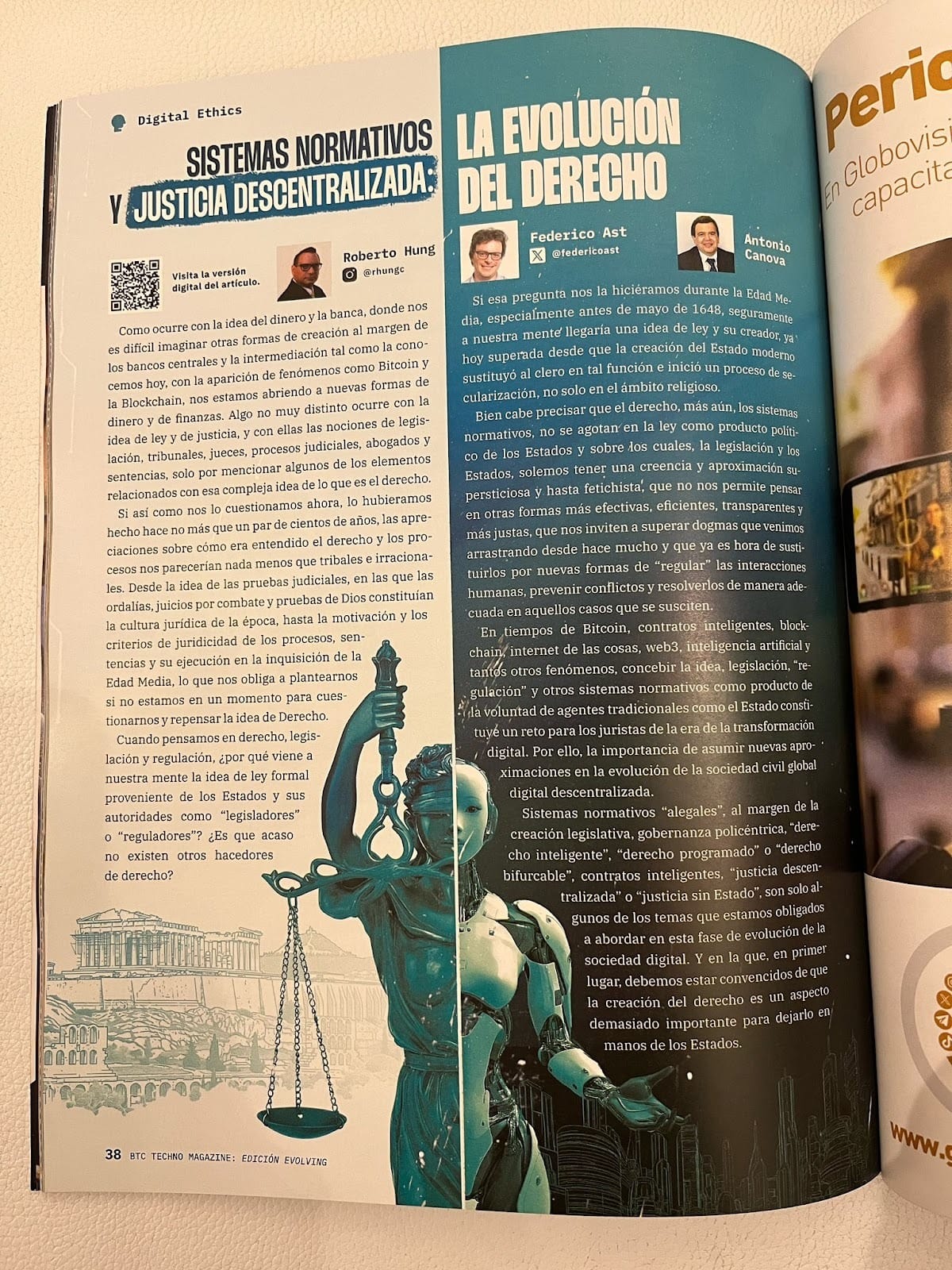
An amazing time at the “Crypto Arbitration Forum” in Zurich!
— Federico Ast (@federicoast) May 20, 2025
Excellent discussions on the impact of technology in arbitration and the emergence of new scenarios—such as disputes arising in and between DAOs.
The world is evolving rapidly, and dispute resolution systems must keep… pic.twitter.com/23wOV4EqXo
Crypto Arbitration Forum in Zurich. May 2025.
At the @0G_labs event listening to panels on decentralized AI agents as part of ETHSF 2025. pic.twitter.com/hIl29RzGWR
— William George (@williamhwgeorge) March 13, 2025
William participating in Ethereum San Francisco. March 2025.
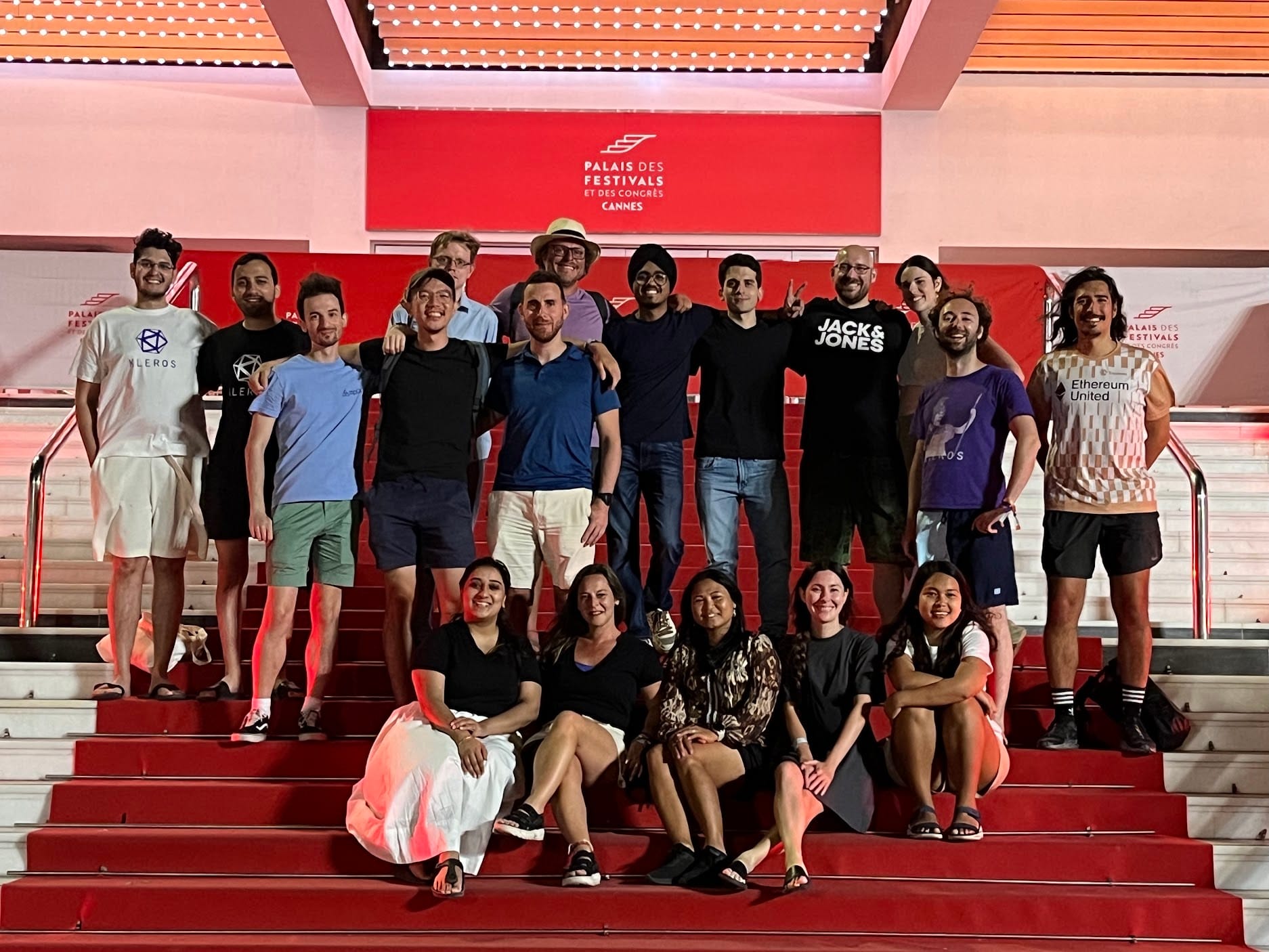
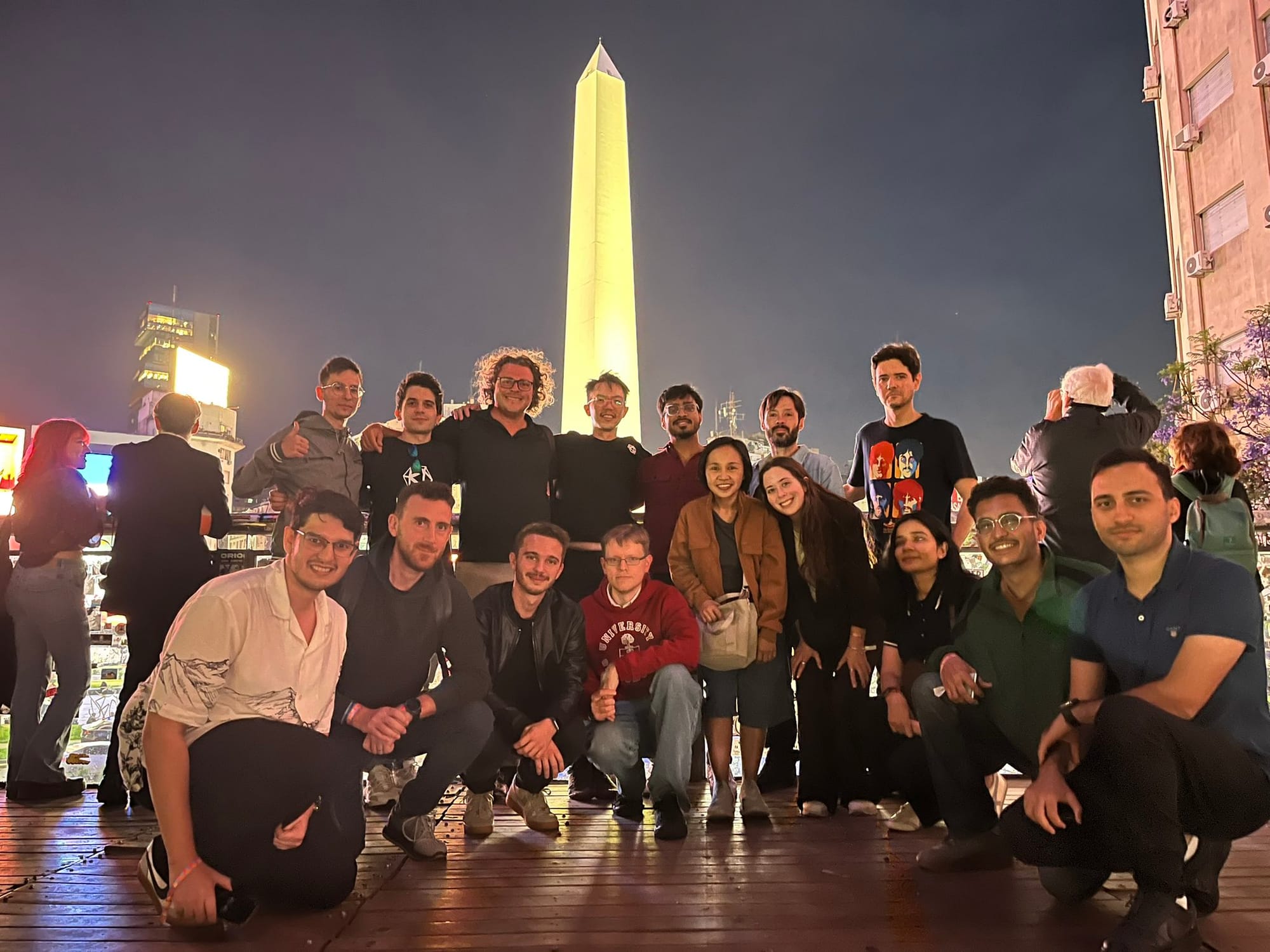
Proud to have won the Uniswap Cup with the @zksync team (with a little help from Kleros), and to have received the MVP prize! pic.twitter.com/oNi98hqz1L
— Federico Ast (@federicoast) November 16, 2025
Communications Overhaul
Since the early days of the project, we have held a weekly “Ask Me Anything” (AMA) session every Wednesday, providing updates on our activities and answering questions from the community.
In 2025, we overhauled these calls to improve both quality and content. They are now recorded as videos and organized around thematic topics to showcase the full range of our activities. All sessions are published on the Kleros YouTube channel, ensuring accessibility and transparency for the global Kleros community.
The first weekly Kleros community call with the new format. August 20, 2025.
The communications team underwent a major overhaul. Previously, it functioned as a support activity within the business development department, but it has since evolved into a dedicated unit with its own structure, regular weekly meetings, and expanded responsibilities. This transformation has elevated the role of communications within the team, enabling more strategic storytelling, consistent branding, and stronger coordination across marketing, community engagement, and public relations efforts.
Kleros Fellowship Program ⚖️ pic.twitter.com/4Aqh52D4pI
— Dudu | Crypto (@Crypt0Dudu) November 4, 2025
A sample of the new type of short videos we have been experimenting with.
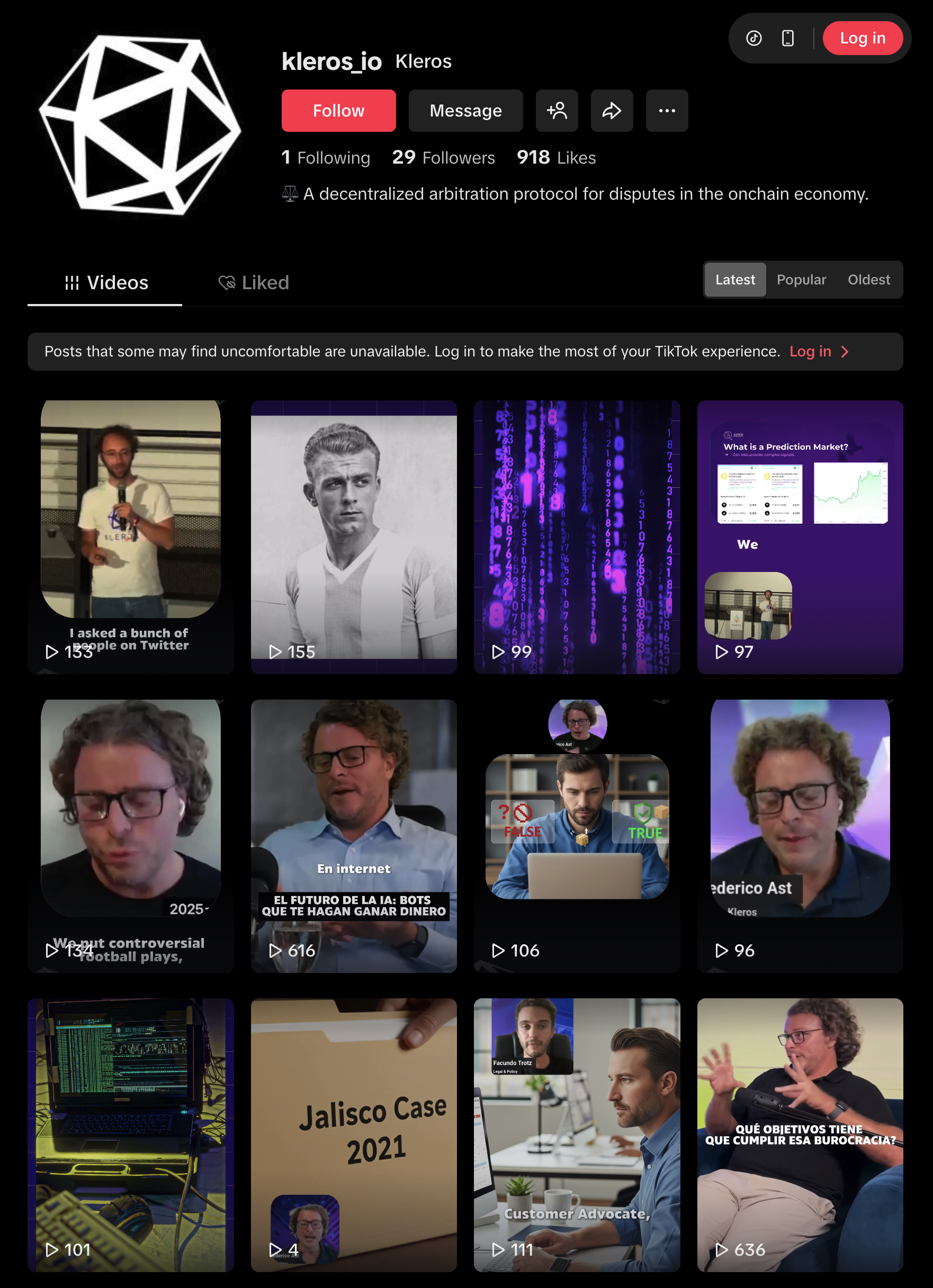
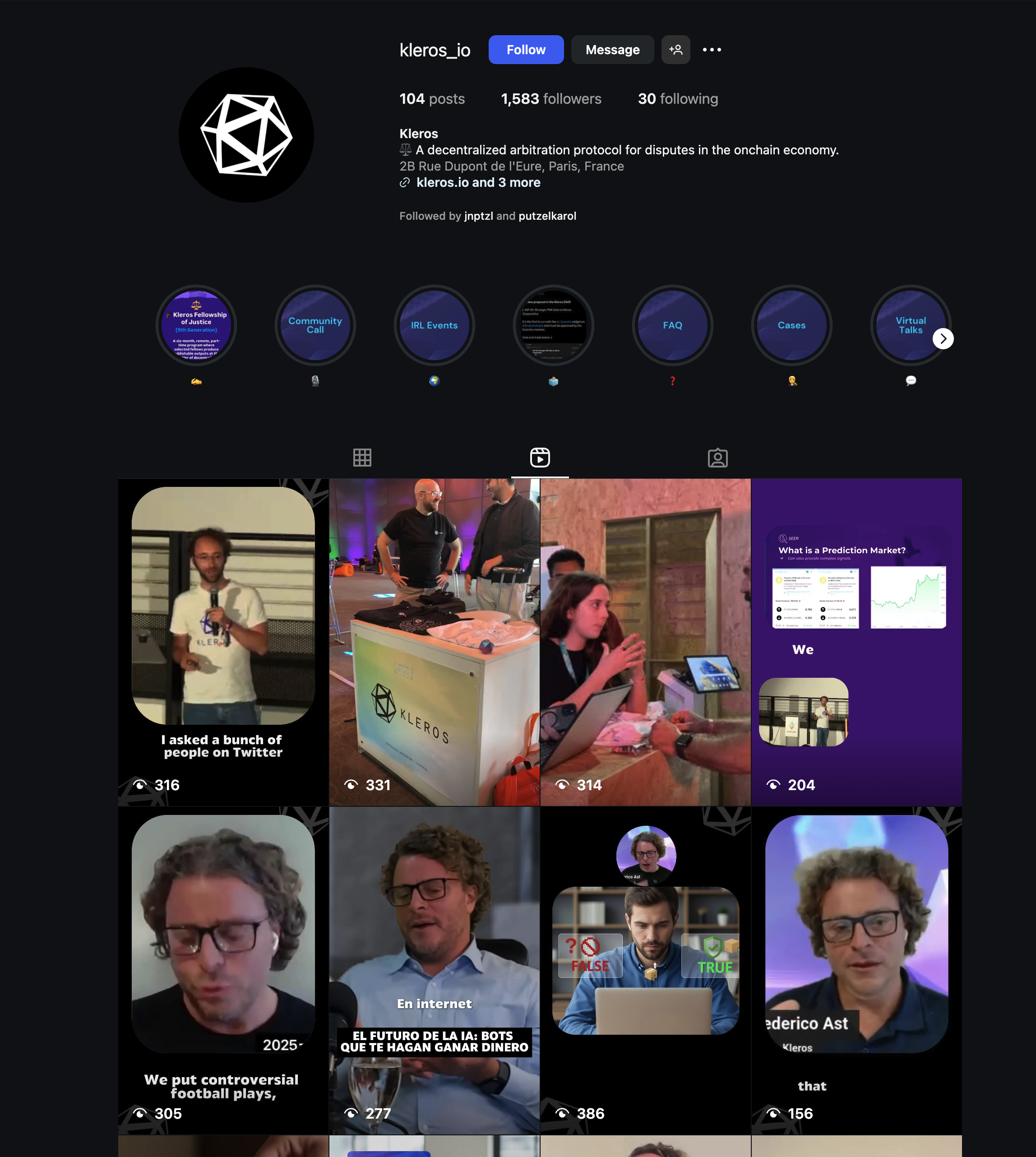
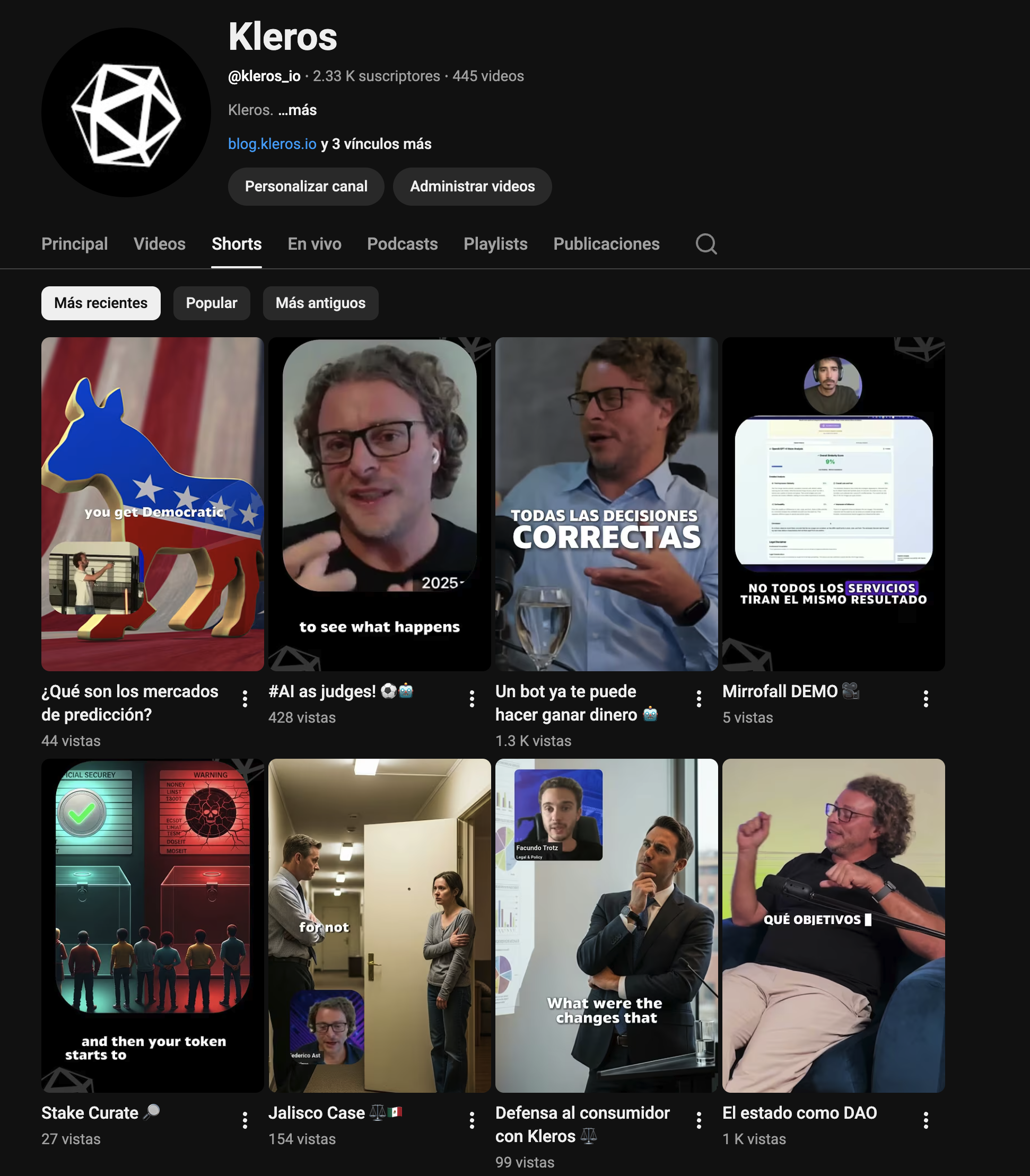
Short videos: our TitTok, Instagram, and Youtube Shorts pages are receiving hundreds of views on every video. Objective for next year: thousands of views per video!
Products & Development
During 2025, we carried out development activities across our various products.
Kleros Court V2 (Kleros 2.0)
Kleros 2.0 represents a fundamental evolution of the Kleros protocol, designed to offer a more affordable, flexible, and scalable solution for decentralized dispute resolution.
After years of research and development, Kleros 2.0 now supports a broader range of cases with enhanced efficiency, security, and user experience. The launch of the Kleros 2.0 Beta is a big achievement in this new phase of the protocol’s development.
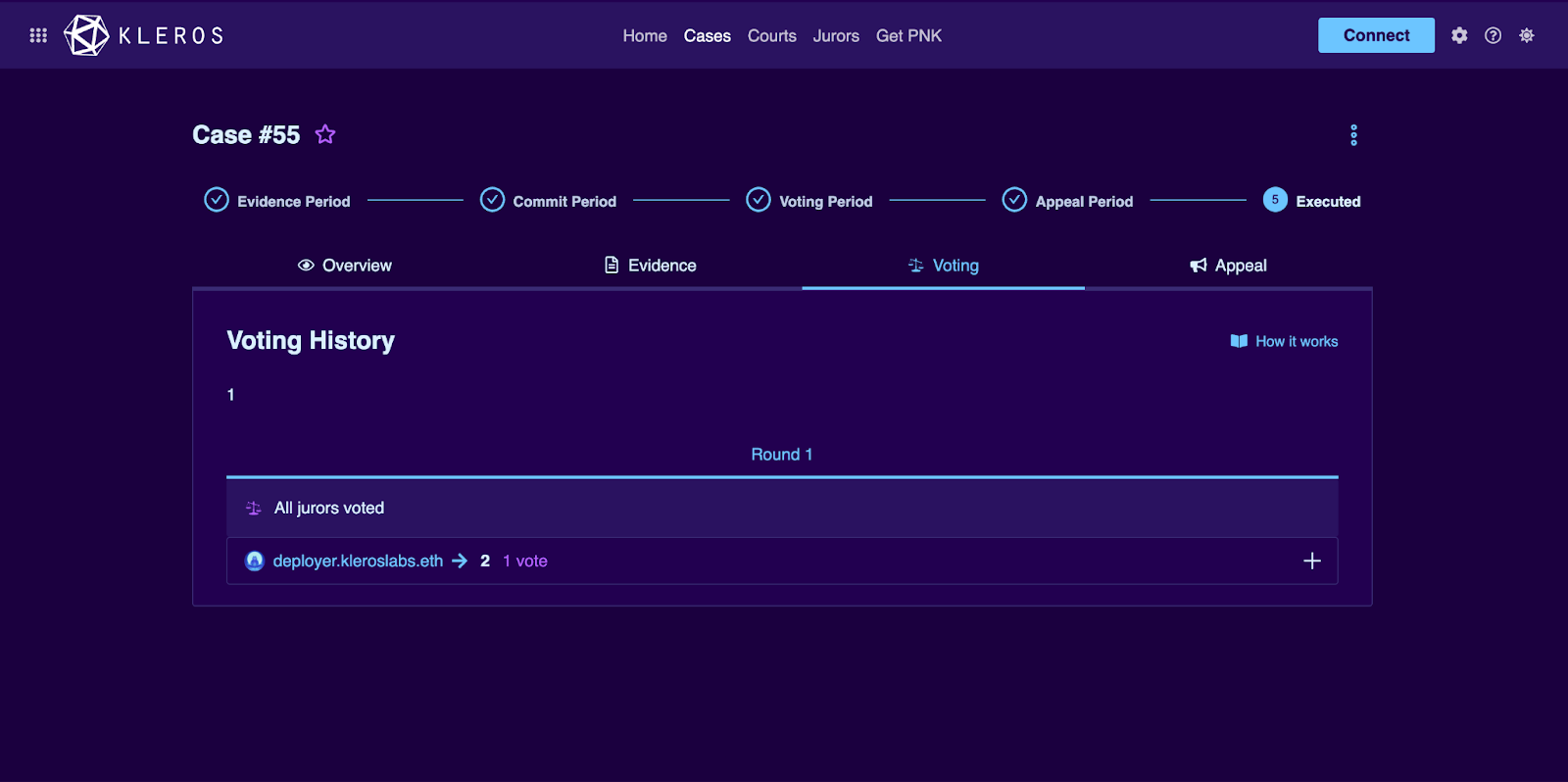
Kleros 2.0 Beta was deployed on Arbitrum One in November 2024, following extensive testing phases and marking the culmination of significant technical development. It's open to previous Kleros V2 testnet users, existing Kleros V1 jurors, and individuals registered on Proof of Humanity V1.
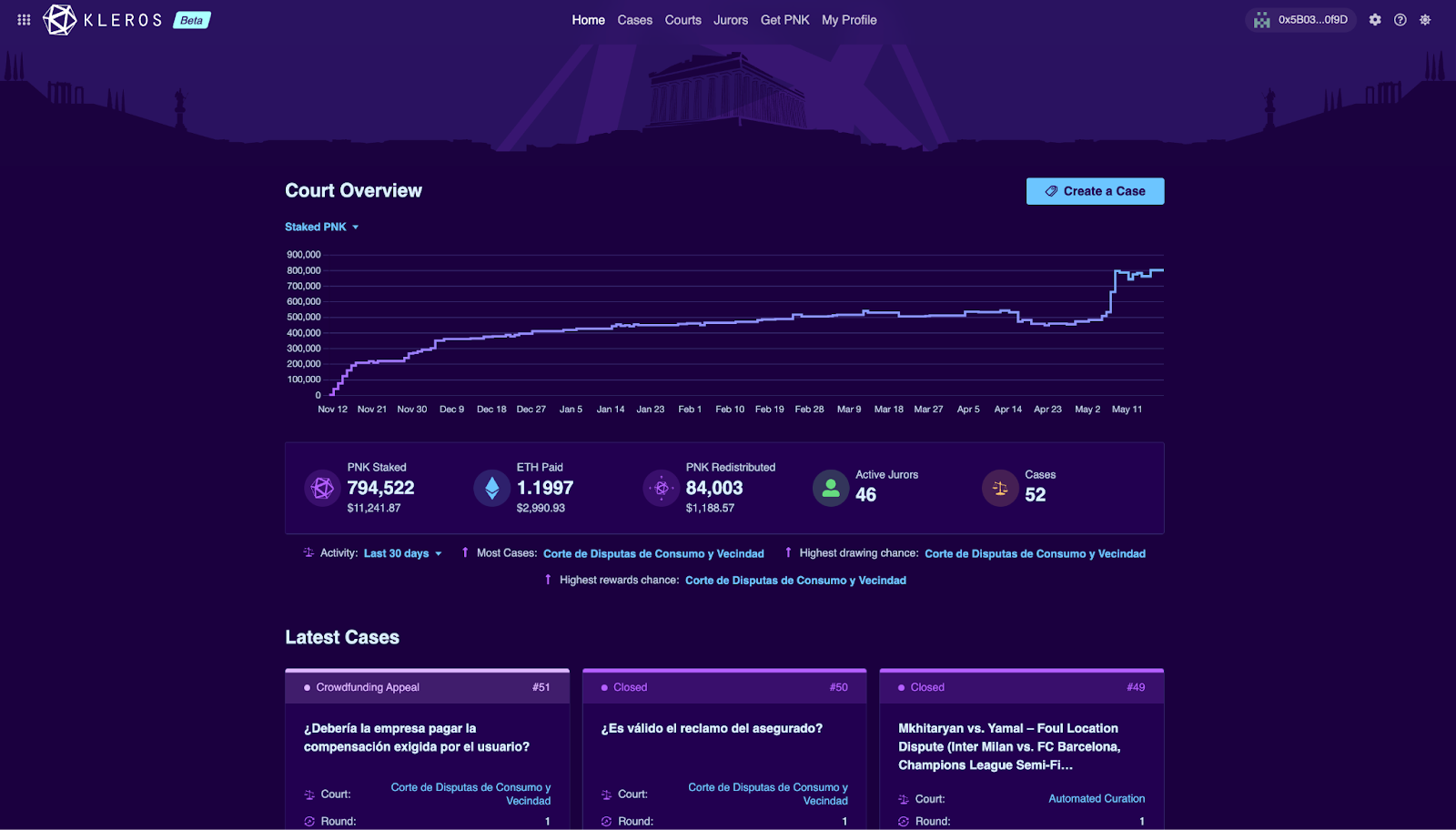
In May 2025, a comprehensive update to Court V2 Beta was delivered. This included real-time court analytics, batch dispute processing capabilities, and enhanced enterprise workflow support.
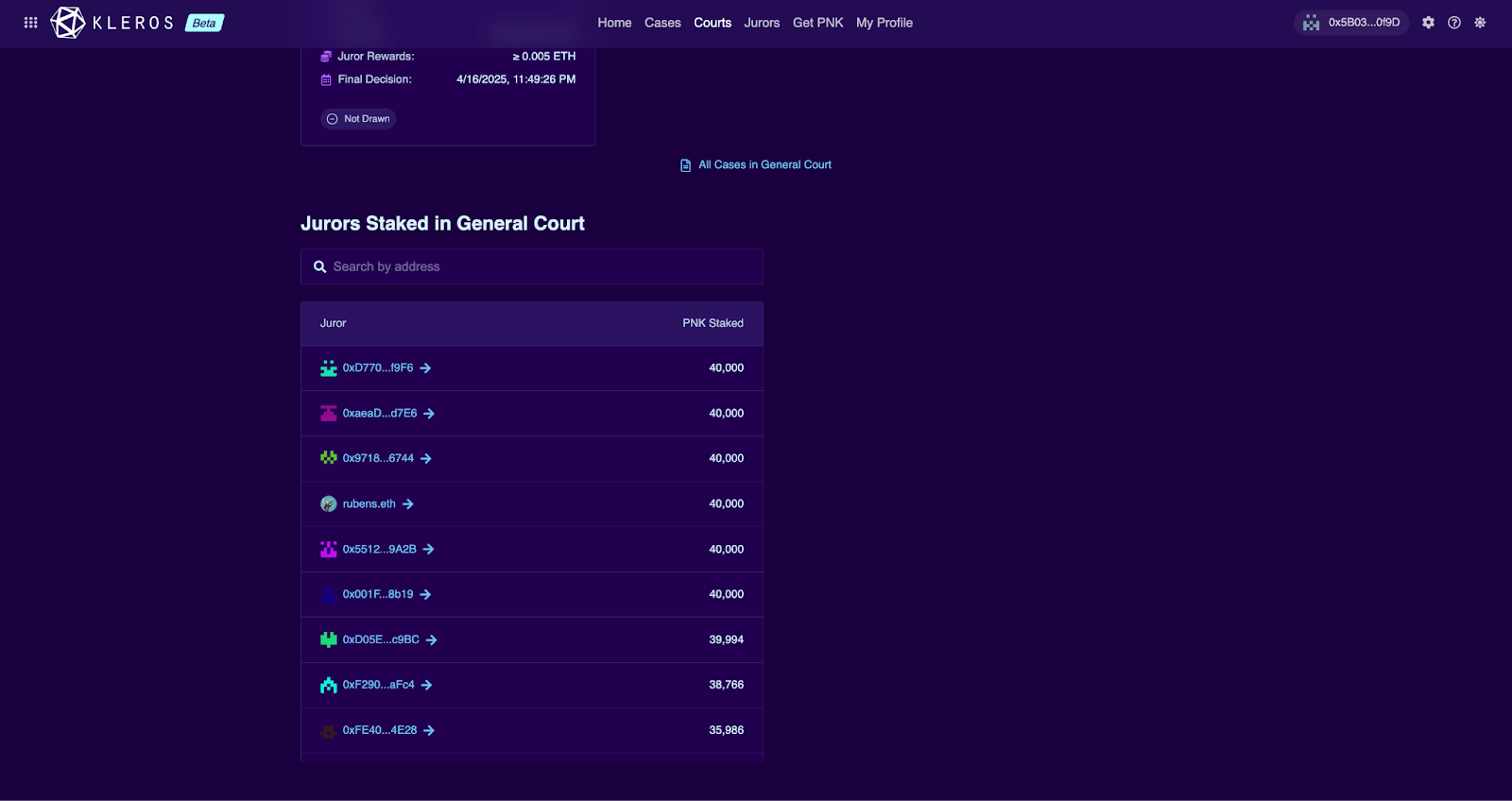
Other technical improvements include an integration with Shutter Network for enhanced voting privacy, support for multiple dispute kits offering new dispute resolution mechanisms, comprehensive user experience enhancements, such as top juror rankings, case duplication options, and batched dispute creation.
Several improvements were made to strengthen the technical foundation of Kleros 2.0. The Court was integrated with a new backend system, called Atlas, which makes the platform faster and more reliable.
Atlas also adds protections against spam and includes safeguards that allow disputes to continue smoothly even if parts of the system require manual intervention. Together, these changes make Kleros 2.0 more resilient, easier to maintain, and better suited for real-world use.
Vea Bridge
Vea is an optimistic bridging protocol that originated from the cross-chain components of Kleros 2.0. It enables secure message passing between blockchain networks, facilitating the enforcement of Kleros rulings across multiple chains.
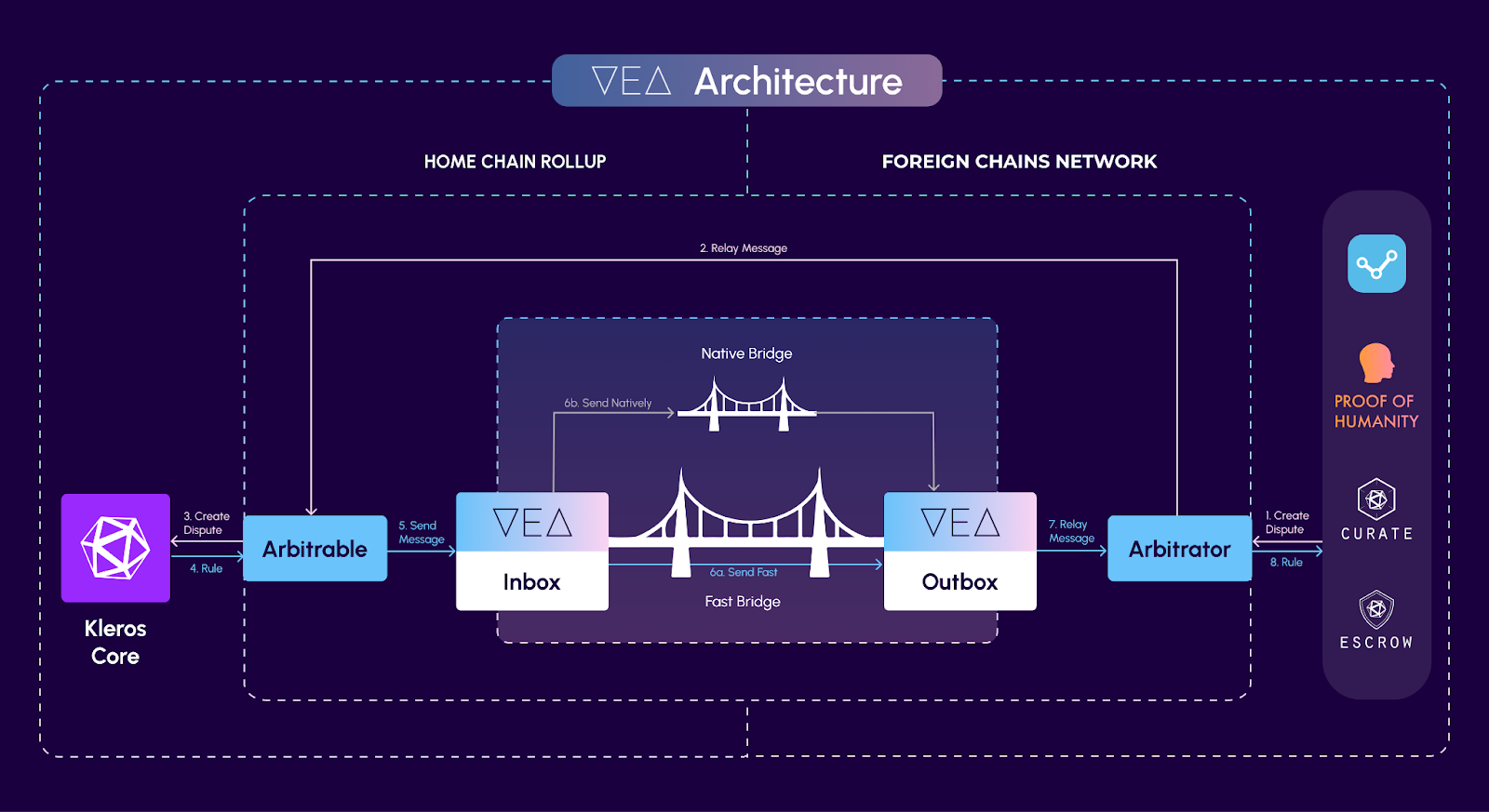
Vea has evolved into a standalone system that allows messages and assets to move securely between different blockchains, regardless of the networks involved. It now supports multiple routes at the same time. For example, from Arbitrum to Ethereum or from Arbitrum to Gnosis.
The team publicly documented how the bridging mechanism works, built VeaScan, a dedicated explorer for tracking cross-chain transactions, and implemented checks for both normal operations and failure scenarios to ensure reliability and security.
Vea was deployed to a developer testing environment and later to the Sepolia test network, with specific routes successfully implemented.
Proof of Humanity 2.0
Proof of Humanity is a system that verifies real people online, helping prevent fake or duplicate identities. It plays a key role in “one person, one vote” governance systems and other situations where ensuring human uniqueness is essential in Web3.
During 2025, the platform’s interface was upgraded by moving from WalletConnect to the Reown App Kit. This change improved security, made future updates easier, enhanced the user experience, and added built-in features such as fiat on-ramps and token swaps.
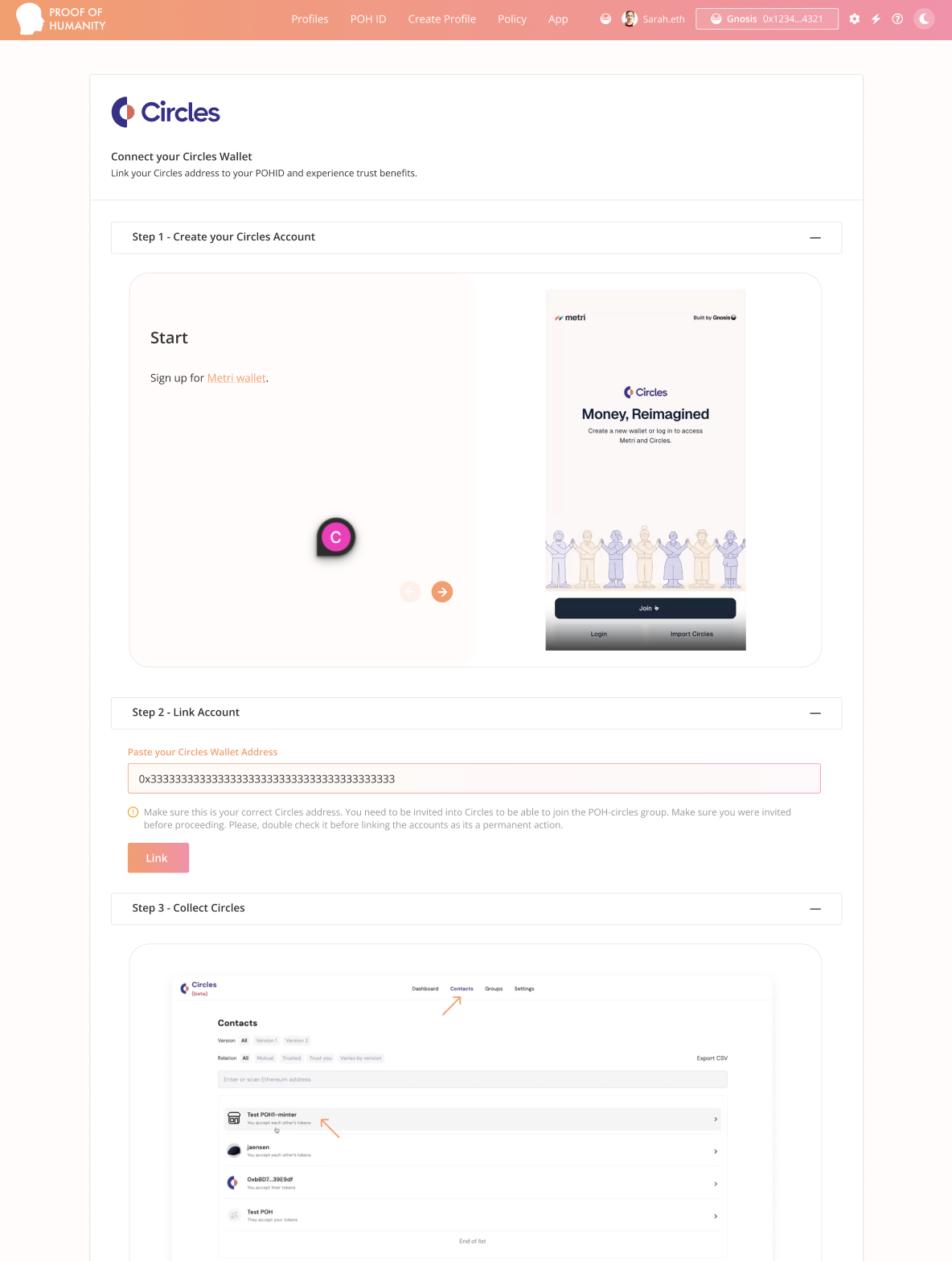
We also integrated Circles V2. This includes preparing blockchain indexing for the integration, creating a Circles group reserved exclusively for verified Proof of Humanity users, and adding a new “Apps” section to the Proof of Humanity website to host current and future integrations.
In parallel, we launched an important privacy initiative aimed at separating a user’s verified identity from their on-chain activity. This work builds on KIP-79 and uses zero-knowledge proofs to protect user privacy while preserving verification guarantees.
As part of this effort, the first version of the zkPOH smart contract was completed using the Semaphore protocol, with full test coverage, deployment tools, and a command-line utility for generating proofs. The team also evaluated several zero-knowledge frameworks to balance security, performance, and cost.
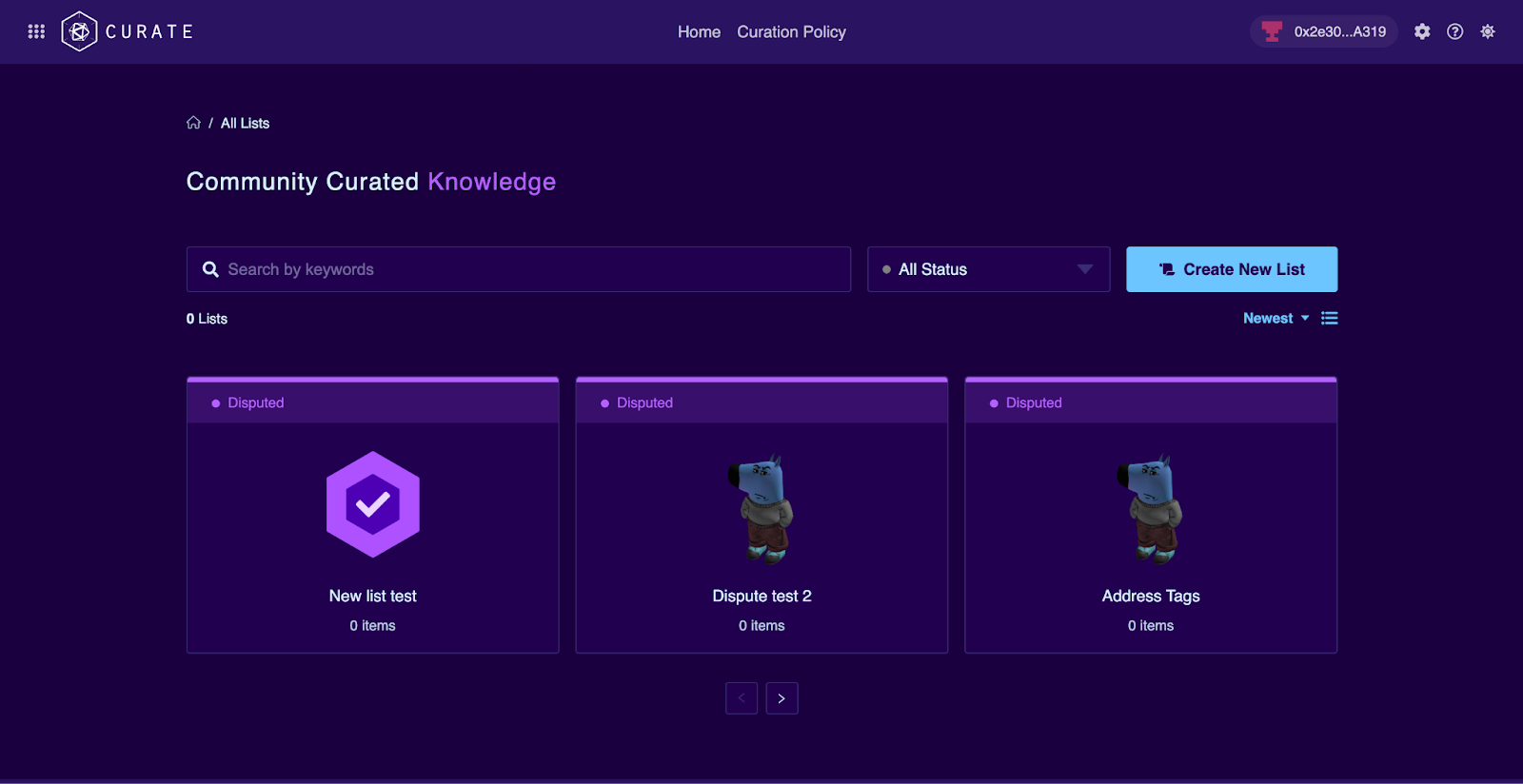
Curate
Curate allows companies, organizations, and individuals to verify items in a transparent and accurate way, without relying on a single central authority. This can give users a competitive advantage by lowering verification costs, scaling more easily, and increasing trust. Anyone can also independently check how and why an item was approved.
In 2025, we released several incremental improvements to Curate V1, including better search engine visibility, improved market visualization, and the ability to customize lists after they are created. However, the main focus shifted to Curate V2 and the new Scout registries.
Curate 2.0 is a complete redesign of the platform, built on a modern and scalable architecture. It supports a broader range of features for creating and managing registries and curated lists and is fully integrated with Kleros 2.0, making it more powerful and flexible for real-world use.
"Exploring Decentralized Justice for Certification and Curation", a webinar we organized to promote Kleros curation use cases. February 2025.
Stake Curate extends Curate by introducing permanent deposits that remain locked over time. Anyone who submits an item must continue to meet the rules indefinitely in order to protect their deposit. If a violation is discovered, challengers can claim that deposit as a reward.
This incentive system encourages ongoing, community-driven monitoring rather than one-time checks. Stake Curate is currently live on the Gnosis Chain, starting with an implementation by DAMM Capital.
Kleros Scout
Kleros Scout is a product that provides security insights about blockchain transactions, helping users better understand and assess on-chain activity. Built on top of Curate and originally developed as a plugin for MetaMask Snaps, Scout has evolved into a broader system for curating and organizing blockchain data.
During this period, several technical improvements were made to strengthen the platform. These included fixing display issues in the Address Tags Query (ATQ) Registry, improving how incentives are shown across the platform, aligning rules and policies across all Scout registries (ATR, CDN, ATQ, and the Token Registry), and building an administrative interface to manage registry parameters more easily.
In parallel, work continued on Scout V2, with a focus on improving visual design and adding live statistics across four Scout registries.
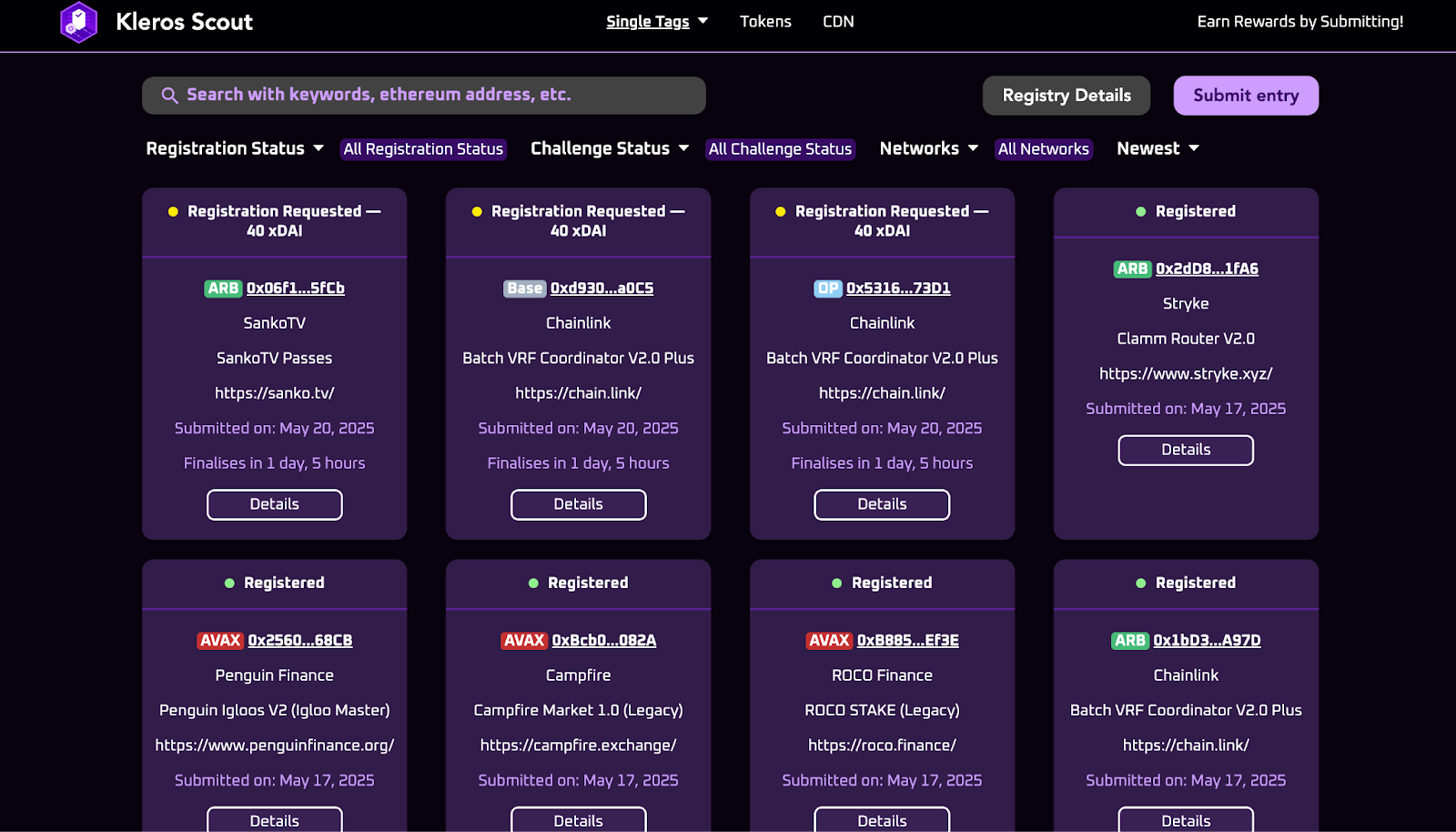
Other noteworthy additions to the Kleros ecosystem include a range of integrations and collaborations that enhance visibility, functionality, and adoption across platforms.
- Otterscan: An open-source block explorer built for local use and open hosting, aligning well with the transparency principles behind this integration.
- Blockscout: A multichain block explorer that introduced the first Scout API service to enable more efficient data fetching.
- Routescan: An integration now allows Routescan explorers to fetch and display Kleros Scout registry data for verified addresses and tokens.
Some Metrics about Curate
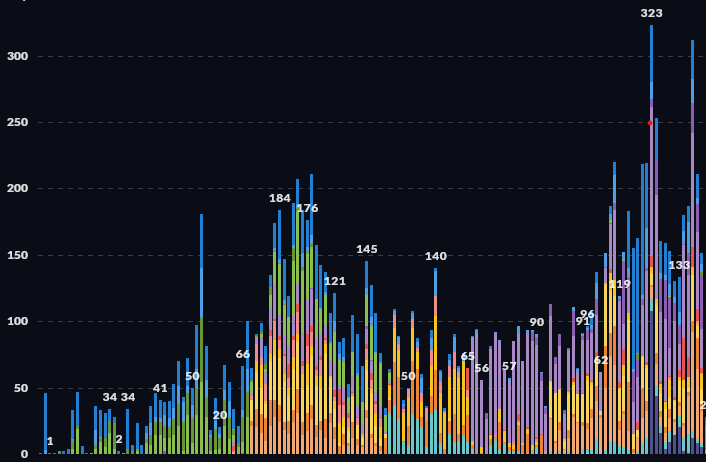
- 200.000+ tagged addresses across four Scout registries, making Scout the largest independent and decentralized source of contract metadata.
- 16.000+ individual submissions.
- 508 disputes in Curation Court (235 in 2025 alone)
- 34% of PNK staked on Gnosis Chain is locked in Curation Court
- 250+ markets verified for Seer Markets
Escrow
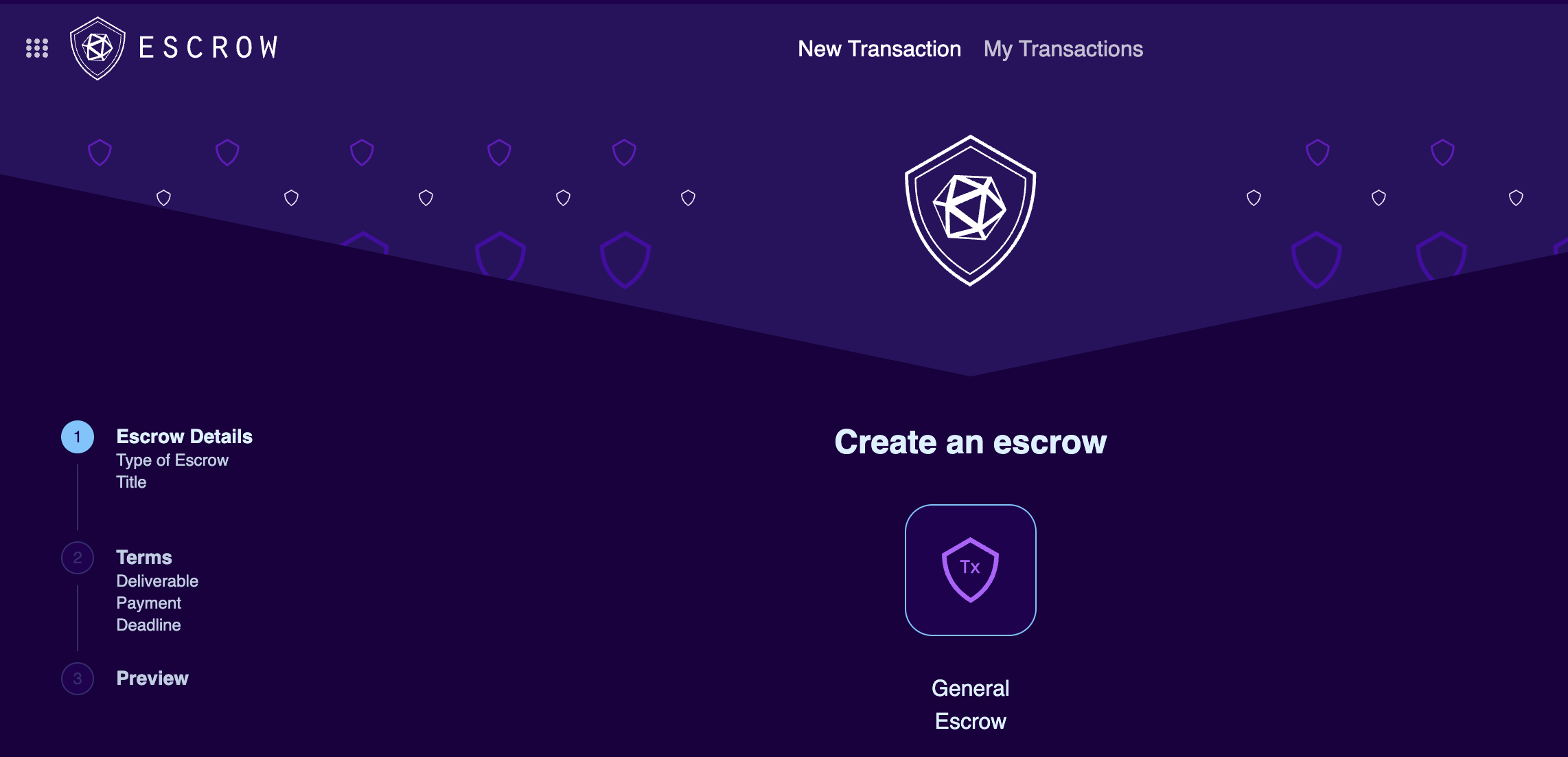
Escrow V2 is an application that enables secure transactions with built-in dispute resolution powered by Kleros 2.0. The platform was rebuilt from the ground up with a modern, scalable architecture, a new settlement flow tailored to Kleros 2.0, improved dispute templates, and a clearer, more user-friendly interface.
The team modernized the underlying technology by upgrading build tools, improving Web3 interactions, adopting a new UI component system, and enhancing how transaction details and attachments are displayed.
A controlled beta launch was carried out on Arbitrum, with safeguards in place to manage risk during early testing. Security and quality were strengthened through extensive testing, fixes to smart contract vulnerabilities, and improvements to documentation and evidence submission.
Finally, Escrow V2 was prepared for enterprise use, with full Kleros 2.0 integration, support for batch transactions, a faster and more reliable data infrastructure, and a foundation designed to scale as adoption grows.
Kleros Oracle
The Kleros Oracle product tackles the “oracle problem” in blockchain by providing a decentralized way to verify real-world events and bring them on-chain, in collaboration with Reality.eth. When data is disputed (such as prices, dates, or numerical outcomes) Kleros jurors can resolve the disagreement in a transparent and decentralized way.
During 2025, support was expanded to six production blockchains, including Base, Polygon, and zkSync, along with their test networks. The system was streamlined to make it easier to add new networks, and cross-chain deployments were successfully tested and launched, including a production deployment with SUKU on Polygon.
Governance and security were also strengthened through improved cross-chain governance support, upgraded security checks, and integration with the latest version of Reality, which makes handling complex data more flexible.
Finally, we released detailed technical documentation for developers and launched a major security competition with Hats Finance to further harden the system against vulnerabilities.
Development Stack Modernization
In 2025, Kleros significantly modernized its technical infrastructure, making the platform more scalable, reliable, and easier to maintain.
The team upgraded its core development tools, moving to faster and more modern systems across all Kleros 2.0 applications and improving performance, accessibility, and compatibility with the latest web standards.
On the backend, Kleros transitioned to a modular architecture called Atlas, which now supports essential features such as notifications, secure sign-in, and file storage, improving reliability and scalability.
In parallel, we also rebuit our UI component library, created clearer documentation for developers, and stronger monitoring tools. Together, these upgrades improved performance, long-term maintainability, and the overall developer experience.
Development Team Management
The development team went through a major expansion and reorganization, becoming the largest in Kleros’s history. This growth made it possible to move faster, develop more specialized expertise, and better support the growing range of Kleros products and infrastructure.
Several new contributors joined the team, strengthening key areas of development. To support this larger team, internal processes were improved. More focused, topic-based meetings replaced some general team calls, making collaboration more efficient.
In addition, Developer Office Hours were introduced to give the wider community regular access to the team through live discussions, technical support, and Q&A sessions, helping improve communication and responsiveness.
In 2025, Kleros continued to advance its mission of building a global ecosystem for decentralized justice through research, development, and strategic collaboration.
Significant progress was made on the technical front, including the deployment of the Kleros 2.0 Beta and the modernization of the entire technology stack, from backend infrastructure and developer tooling to user experience improvements across all applications.
We also deepened our academic and research activities by co-hosting conferences at King’s College London and Stanford University to explore new frontiers such as AI jurors, peer prediction mechanisms, and the use of soulbound tokens in juror selection. At the same time, we engaged in joint programs to fund doctoral research with the University of Oxford and expanded the Kleros Fellowship of Justice, supporting the next generation of researchers and practitioners.
Field validation accelerated through real-world integrations, including pilots with fintech and insurance companies as well as municipal governments, helping establish Kleros as a trusted arbitration mechanism within evolving regulatory frameworks.
In the Web3 ecosystem, Kleros strengthened its role as a core infrastructure layer for decentralized governance and futarchy-based decision-making.
Taken together, these advances represent more than technical progress: they signal a shift in how justice can be built, governed, and scaled for a digital world. By combining rigorous research, real-world deployment, and open collaboration, Kleros is laying the foundations for a justice system that is more transparent, participatory, and globally accessible.
As decentralized technologies continue to reshape institutions, Kleros is positioning itself as an infrastructure for fair decision-making wherever trust, coordination, and accountability are needed. The work ahead remains ambitious, but the direction is clear and the momentum is real.