The Kleros Fellowship of Justice, 10th Generation: Applications Open!
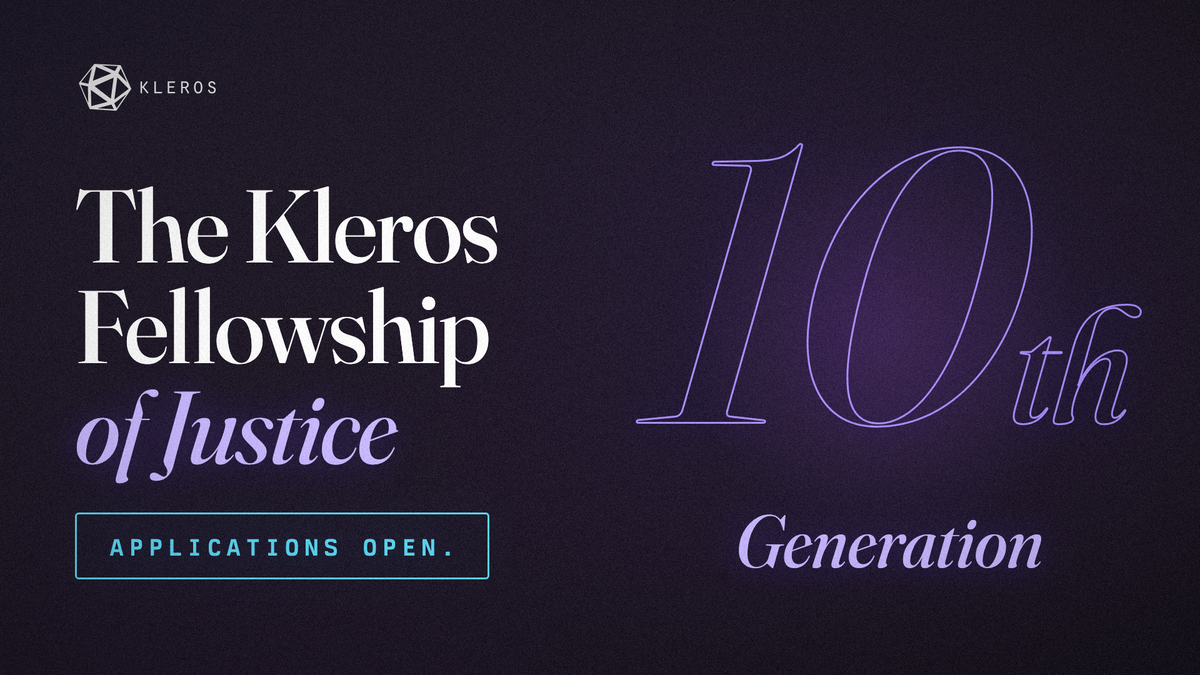
The applications are now open for the tenth cohort of the Kleros Fellowship of Justice. We invite researchers and practitioners from different fields to contribute to building the decentralized justice movement...
The Kleros Fellowship of Justice was launched in August 2018 as a six-month research program with the goal of creating a community of experts in the emerging field of decentralized justice. Past cohorts have shaped how Kleros thinks about cross-border arbitration, AI-assisted dispute resolution, juror incentive design, and platform governance.
Kleros welcomes proposals for our 10th batch of the fellowship across the tracks set out below. Candidates can apply by completing the application form.
We invite innovative proposals across a range of areas, including artificial intelligence, decentralized commerce, enterprise dispute resolution, DAO governance, and more!
Fellowship Tracks
Our core fellowship tracks include:
AI in Dispute Resolution
This track examines how AI tools can interact with decentralized justice systems. Potential research topics include ways AI agents can be integrated into the Kleros arbitration workflow and the design of juror-support tools that help evaluate evidence and reduce bias while keeping humans central to adjudication.
Furthermore, we are interested in how AI systems such as LLMs behave when tasked with resolving cases as Kleros jurors. Questions include the variability in how AI systems respond to a given case (across model choice, version, training data, prompt formulation, and other factors), whether that variability reflects systematic biases that can be predicted in advance, and how AI jurors compare with human participants when making economic decisions.
Moreover, we are interested in research that extends results in behavioral economics to AI systems in the context of decentralized justice. To what degree would AI jurors deviate from models of rationality when making economic decisions as jurors in decentralized justice platforms, and how does this behavior differ from that of human participants? Finally, what are the ethical considerations of AI use in blockchain-based dispute resolution?
AI Corporate Governance and Decentralized Dispute Resolution
This track explores how Kleros could support the governance and dispute resolution needs of AI-driven organizations as they become increasingly integrated into legal and business organizations and potentially recognized as legal entities themselves. For example, research could examine emerging legal frameworks such as Argentina's proposed legislation on AI-driven companies or Estonia's initiative to issue digital identities ("AI ID codes") for AI agents and assess how Kleros could fit within these ecosystems.
Potential topics include identifying the most suitable legal seat for arbitration, the appropriate dispute resolution framework, enforceability considerations, governance design, and the comparative advantages of decentralized dispute resolution. We particularly welcome research that identifies practical opportunities for Kleros to become a core dispute resolution layer for AI-native organizations and emerging AI governance frameworks.
Private Courts
This fellowship track explores the design and implementation of confidential dispute resolution structures within Kleros, allowing parties to submit cases and evidence securely. Research will focus on building censorship-resistant architectures where only selected jurors can access sensitive data, ensuring compliance with global privacy regulations like GDPR.
Key areas of investigation include developing the necessary legal infrastructure, such as strong privacy policies and user agreements, as well as technical solutions for encrypted data storage and secure Kleros integrations. This track is ideally suited for a collaborative duo consisting of a data privacy law expert and a blockchain engineer.
Consumer Dispute Resolution
This track addresses the application of Kleros in enterprise settings, particularly in e-commerce, fintech, and insurance, and also addresses the "justice gap" in the digital economy. Most consumer-merchant disputes today never reach formal resolution. Proposals can cover practical, legal, and operational aspects of deploying Kleros for consumer disputes inside these sectors. Read more in our blog.
This track also focuses on the legal frameworks that enable private entities to act as consumer alternative dispute resolution (ADR) mechanisms with binding effect on providers. Map global frameworks, analyze institutional recognition requirements, and explore how Kleros fits within these systems.
In Spanish: a webinar on consumer ADR frameworks and how Kleros fits within existing legal systems for binding alternative dispute resolution.
Intellectual Property
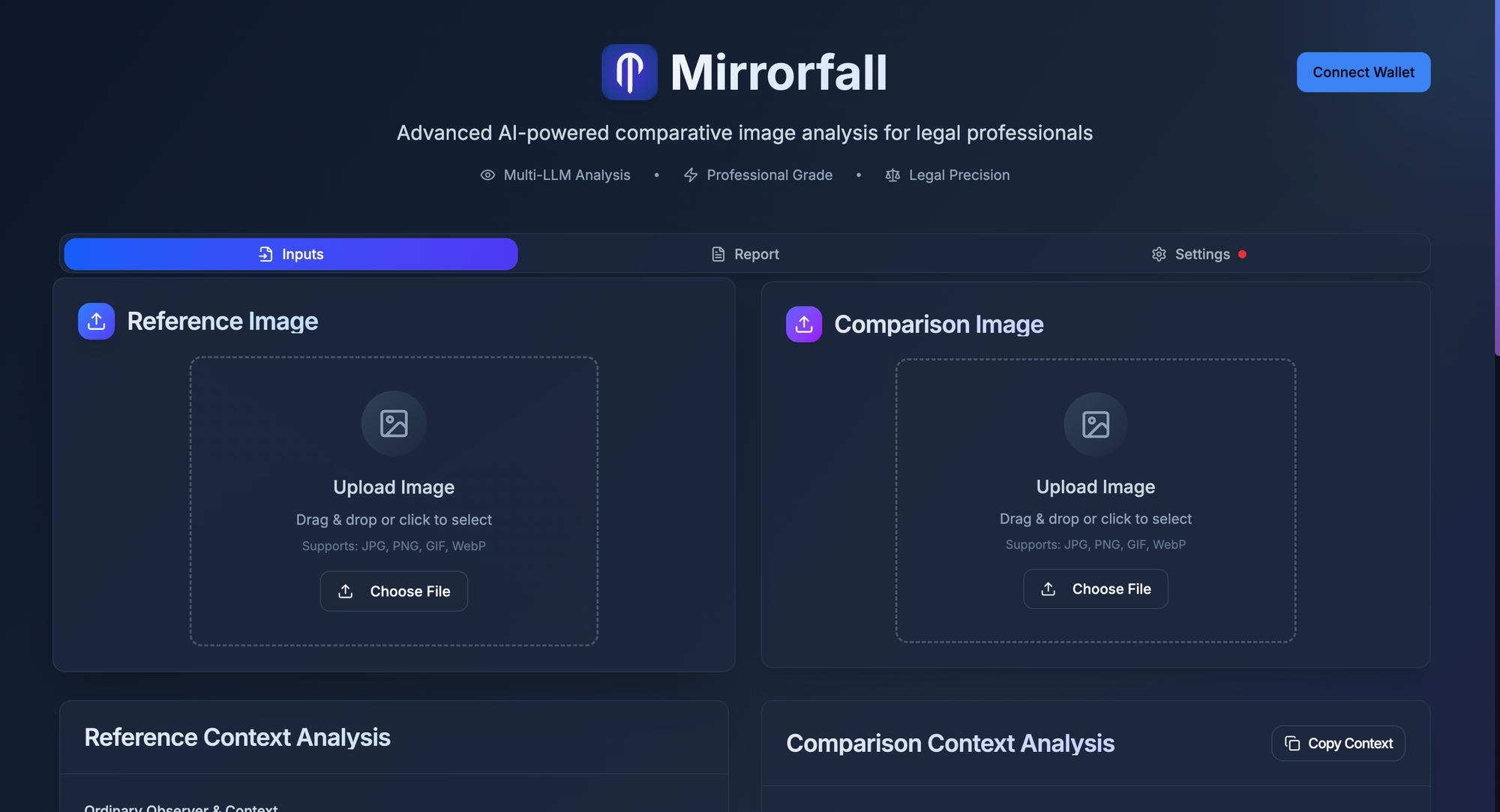
Investigate how Kleros can resolve IP disputes in a decentralized and cost-effective manner. You can explore hybrid models that use AI agents for initial assessments and have human experts handle appeals to resolve copyright and other IP-related conflicts. Learn more about Mirrorfall.
Decentralized Commerce (DeCom)
This track explores how Kleros can help credibly neutral marketplaces for real-world goods and services grow by solving risk management issues, including dispute resolution. Potential research topics include designing dispute mechanisms for human services, integrating Kleros into AI-assisted arbitration workflows, and exploring its role in emerging DeCom environments such as pop-up cities or crypto-native marketplaces.
Legal Integration of Decentralized Dispute Resolution Systems
This track explores how Kleros can be incorporated into conventional legal frameworks, including courts and arbitration systems. The suggested research topics include the legal recognition of Kleros decisions, the potential for enforcement by state authorities, and the development of hybrid models blending the decentralized and traditional dispute resolution methods.
Dispute Resolution in the eSports Industry
As the global eSports sector has grown, traditional legal frameworks have found it difficult to address its distinct issues. Fellows are invited to propose research topics that include both theoretical analyses of decentralized justice and practical applications of the Kleros model tailored to specific eSports scenarios.
Kleros for dispute resolution in the eSports industry presented by Federico at a conference co-hosted with the LexTech Institute and the World Intellectual Property Organization at the University of Neuchâtel. May 2024.
Cryptoeconomics and Mechanism Design
The track addresses the economic foundations of decentralized juror behavior, tokenomics, and the role of cryptoeconomics in ensuring fair and efficient governance. Potential research topics include questions such as how different incentive structures (like staking, slashing mechanisms, or reward distributions) impact juror behavior.
Talks from the "Mechanism Design for Decentralized Justice" conference, co-hosted by Kleros and the King's Institute for Artificial Intelligence in April 2025.
Dispute Resolution in Social Media
This track explores the application of Kleros to complex challenges arising on social media platforms, including content moderation, user conflicts, intellectual property claims, and community-driven fact-checking against misinformation. Research topics may cover protocol-level design, platform integration, and the governance of moderation decisions.
Federico at the University of Neuchâtel presented the use of Kleros to improve social media moderation at the “Dispute Resolution in Social Media Platforms" conference
Governance
This track examines the role of Kleros within the governance structures of DAOs, including dispute resolution between contributors, conflict over proposals, voting mechanism design, and the accountability of stakeholder decisions. Proposals may focus on specific DAO contexts or on general governance theory.
The use of Kleros for DAO governance by Federico at the Ethereum France Conference.
A selection of work produced by Fellows in previous editions of the program:
- Recognition and enforcement of Kleros awards under The New York Convention in developing areas by Jake Lowther
- Accommodating Kleros as a decentralized dispute resolution tool for civil justice systems: theoretical model and case of application by Mauricio Virues
- Kleros for copyright disputes in digital environments by Paolo Archila
- Decentralized Justice in Football: An Operational Framework for Integrating Kleros and AI with the VAR Protocol by Muhammad Ayaan Shehryar
- Kleros for Real Estate Transactions from Spain by Guenter Schramm Tronca
- Enhancing Online Dispute Resolution through Natural Language Processing by Alesia Zhuk
- Integrating Kleros Onto Platforms Tokenizing Real-World Assets For Financing Purposes by Inês Bragança Gaspar
We have also started inviting past Fellows to our community calls. We are releasing these conversations as an ongoing series, and you can listen to them here.
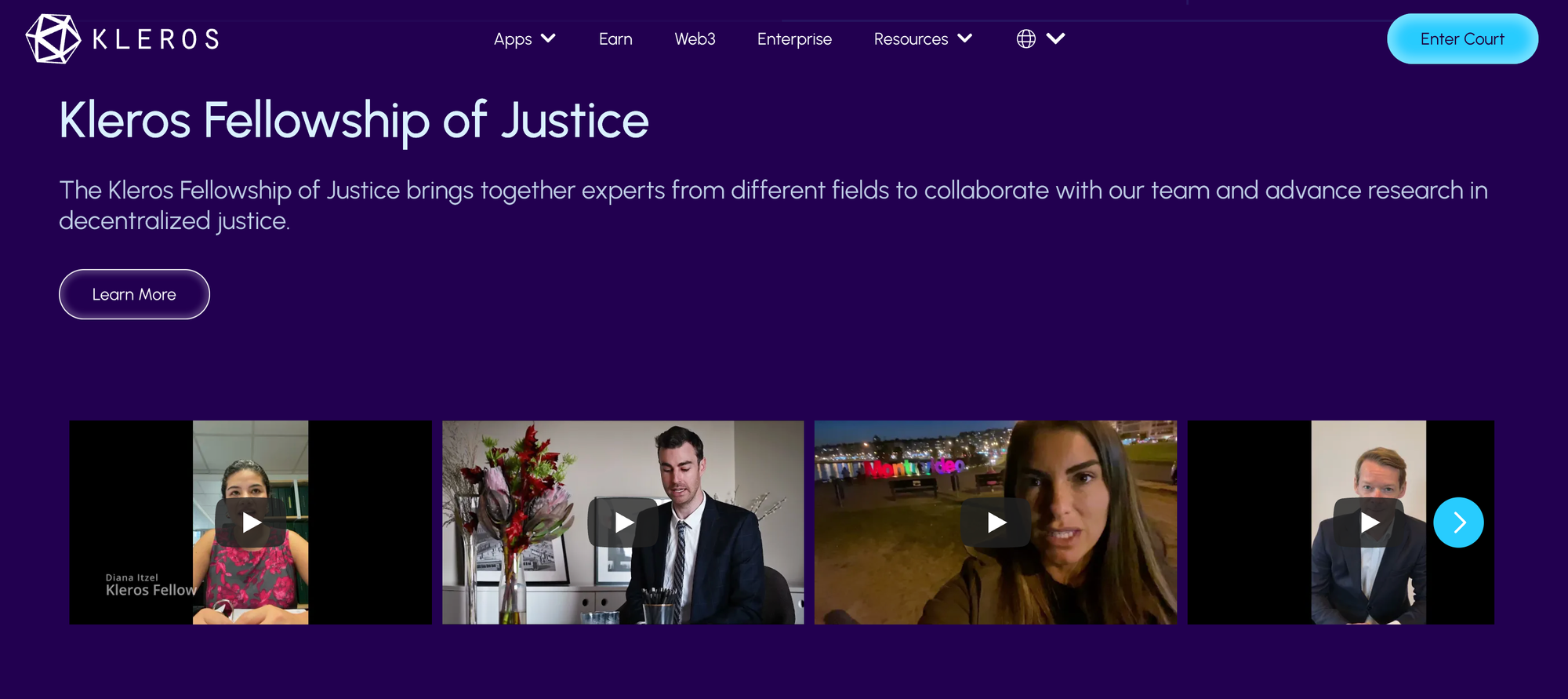
🎓 The Kleros Fellowship of Justice brings together researchers and practitioners exploring how decentralized dispute resolution works in the real world, from university law faculties to working lawyers.
— Kleros (@Kleros_io) June 18, 2026
We've started publishing our conversations with them.
Playlist below ↓ pic.twitter.com/r07HOQjFZi
You can find the full list of Fellows and their research on the Kleros R&D Fellowship page. Accounts from past participants about what the program is like are collected in the testimonials post, and further coverage of previous cohorts is available under the Fellowship tag on the Kleros blog.
Program Details
Candidates will be accepted into the Fellowship based on the quality of their proposal. $1,000 will be paid to candidates upon the successful completion of the program.
The completion of the program will require the following:
- A written submission of a document.
- Submission of a 10 to 20 minute video recording presenting slides with the main findings of the research.
Want to apply but your interests don't fit into any of these categories?
The Fellowship also accepts candidates from other lines of research in law, business, and computer science.
How to Apply
Application Link
Have a question? Feel free to email fellowship@kleros.io
Apply now and help build the future of decentralized justice!