Kleros Development Update June 2026
📋 June 2026 Summary
- Court V2 contracts the team completed simplification work completed across the dispute kits. Forking court specifications walked from "started" into review and into a governance-level discussion across the four weeks. The forking dispute kit moved from in progress into draft.
- Court V2 frontend the team extracted the file viewer into the shared Components Library and merged it. Contracts library rework and version pinning are done and under review now. The DisputeKit frontend refactor was merged.
- Court V1 the team added monthly totals to the staking rewards page, surfaced public-vs-hidden vote details per court at staking time, and added an unsubscribe warning.
- Vea the team integrated an Envio HyperIndex indexer into the VeaShi scanner, shipped a validator RPC fallback, added new Base and Arbitrum routes, and patched an Envio dependency vulnerability.
- Foresight the team launched movies round 2, shipped a P&L display, landed post-trade quick updates, shipped a new chart UI, added an unsubscribe flow, and moved an email UX rework into progress.
- Escrow V2 the team deployed security fixes to dev and prod, picked up kleros-app 3.0.1 with unsubscribe-from-notifications support, and surfaced a smart-contract-wallet sign-in bug that is being worked through.
- Escrow V1 was whitelisted on Reown at escrow.kleros.io, and a dispute-information display bug was fixed.
- Kleros-app v3.0.1 shipped with product differentiation between signup and IPFS, unsubscribe support on the account-deletion path, better docs, and a published changelog.
- Atlas team added observability charts, migrated the keeper bot, improved logging, and ran a second pass of security hardening late in the month. A hack attempt was handled with no harm done.
- Proof of Humanity V2 team shipped web security changes, additional security fixes, referral system development, and keeper bot optimization. Social graph work continued.
- Frontend security audits all Frontends including v1, v2, and Poh, with possible XSS attack vectors specifically reviewed.
- Kleros Skills continued CLI and MCP iterations on top of the planned skills for publishing soon. A Shodai experiment was opened around a possible ClawBank integration.
- KIP-87 (Curation Court on Gnosis with hidden voting) had a new transaction submitted to the multisig after the May parameter issue.
- Website took down the old Kleros website, and fixed broken links for the Whitepaper, Yellowpaper, and Fellowship
Now let's go product by product.
Court V1
Court V1 picked up two visible changes for jurors and a small notification nudge.
Monthly totals are now displayed on the staking rewards page at court.kleros.io/staking-rewards, which makes period-by-period accounting much easier for anyone reconciling rewards over time.
When staking, jurors now see whether a court uses public or hidden voting, which is displayed directly per court. The expectation around vote secrecy is set before any commitment is made.
A warning was also added around unsubscribing from notifications so that users do not silently lose reminders for their cases.
Court V2
After the April internal review and the May triage, the simplification work was applied to the dispute kits. In parallel, the forking court specifications progressed from "started" in the first week into "in review" by the third week, and then into a governance-level discussion by the last week. A separate forking dispute kit moved from "in progress" into "draft" through the same period.
On the frontend side, the file viewer was extracted into the shared components library and merged, replicating the security treatment from the components library as a preparatory step before fully migrating Court V2 to the latest version. A separate contracts library rework finished its wiring and version pinning and was moved to review last week. The DisputeKit frontend refactor was also merged.
A small but annoying duplication occurred when the Court V2 beta item appeared twice after scrolling and opening the apps menu; this issue was reported and fixed.
The beta dispute archival bot, which is needed to fold existing beta cases into the upcoming stable contracts, stayed in its initial review pass.
Atlas (Backend Services)
Atlas spent June on hardening and operability rather than new endpoints.
Observability charts were added, the keeper bot was migrated, and logging was improved throughout. A hack attempt was detected and handled with no harm done. A late-month sweep added more security hardening and another pass on observability.
On the operations side, a whitelist was implemented on the kleros-api RPC at Alchemy to prevent abuse on the Sepolia network from rate-limiting production traffic. New arbitrables will need to be added to the whitelist manually as they ship.
The smart-contract-wallet sign-in failure that showed up in Escrow V2 was investigated from the Atlas side as the upstream signing path, alongside a separate email-change bug that required a temporary workaround.
An internal API for ATQ was approved in principle: a read-only frontend over the ATQ API data that surfaces synchronization status and identifies failures, with no mutable interactions.
On the bot side, the team ran maintenance on the PoH bots so they handle failing subgraph requests without going down with them.
The integration test suite was rewritten to support parallel runs with more reliable tests, which is expected to cut overall testing time considerably. A new endpoint was also added to register Foresight markets in Atlas, which is needed to deliver Foresight notifications. The notifications work, and it is now in review.
💡 Note: Atlas remains an internal backend library for Kleros development teams only and is not intended for community use or integration.
Kleros-app
Kleros-app v3.0.1 shipped this month. The release covers product differentiation between signup and IPFS products, improved JSDoc coverage, unsubscribe support on the account-deletion path, and a refreshed changelog. Both Escrow V1 and Escrow V2 picked up the new version straight after publication.
A separate decision was made regarding the unsubscribe flow itself. Because unsubscribing affects every Kleros product the user is signed up for, the UI now surfaces a clear warning plus a two-step confirmation before going through. Both Escrow V1 (which does not handle unsubscribes directly) and Escrow V2 implemented this guard.
Escrow V1
The team picked up the new Kleros App 3.0.1 release in Escrow V1 and added the two-step unsubscribe confirmation alongside it.
escrow.kleros.io was whitelisted on Reown. A dispute-information display bug was also fixed.
Escrow V2
A round of security fixes was deployed to dev and then to production. The kleros-app 3.0.1 upgrade landed alongside support for unsubscribing from notifications.
A user reported a sign-in failure that turned out to be a smart-contract wallet signature being rejected at the signing path. The team's investigation continued to identify the right fix.
A separate bug surfaced in the email-change flow, which was failing because of an invalid product value. The team put a temporary workaround in place while they queued a proper fix.
The UI Components Library migration was merged, bringing the shared file viewer in alongside the rest of the V2 frontends.
Curate
The team ran frontend security audits across all frontends, including V1, V2, and Proof of Humanity, with possible XSS attack vectors specifically reviewed. The resulting PRs went through review, merge, and deployment by mid-month.
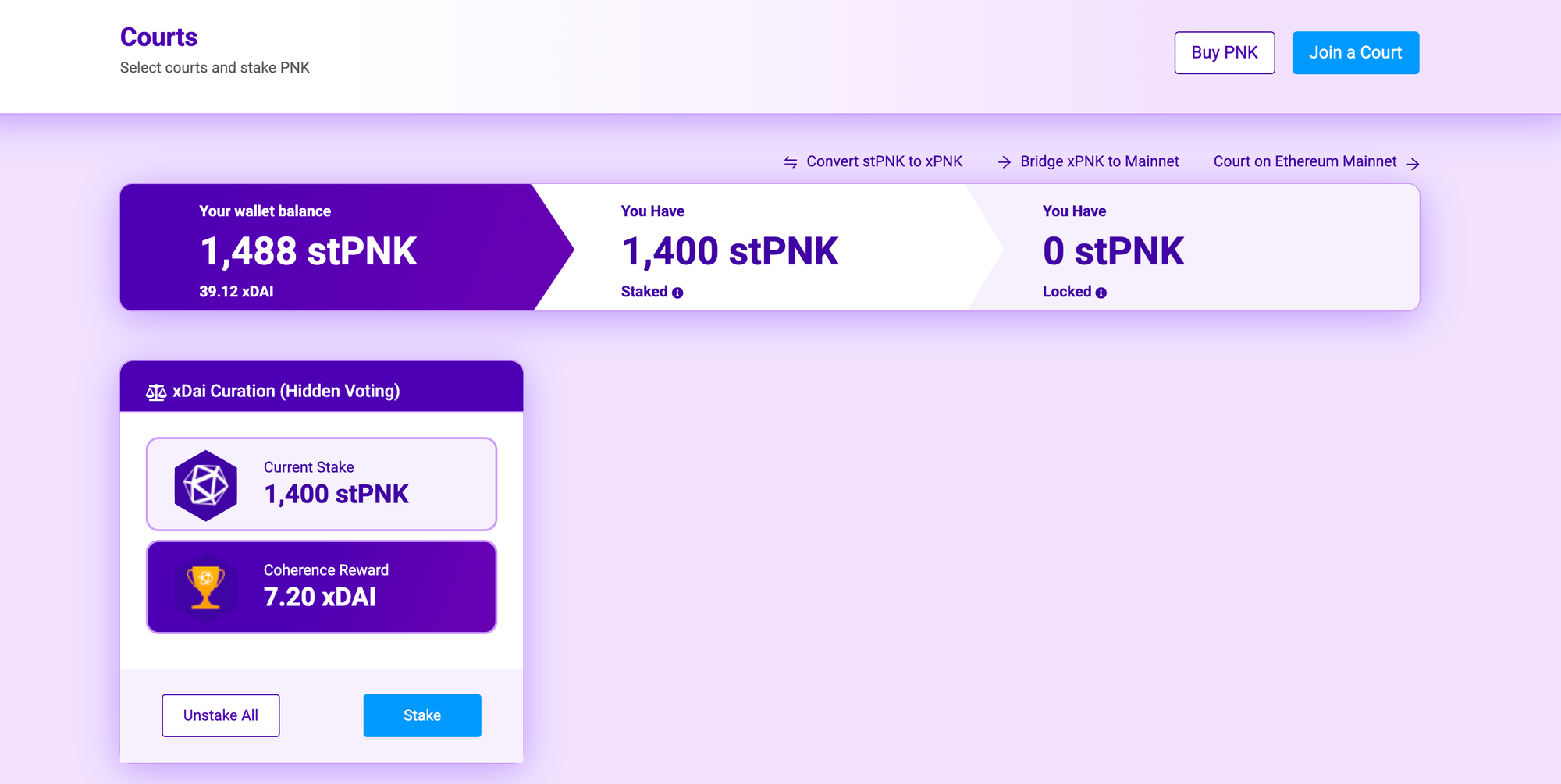
A separate new Curation Court on Gnosis with hidden voting (see KIP-87) is live. Once the new court is live, the team plans to set a migration day to move all Scout registries (and likely Seer) to the new court.
Scout
The team continued maintenance on Scout alongside the broader Curate V2 audit pass, with the same security review applied across the V2 frontends.
Dispute Resolver
The team investigated and fixed an issue where an ArbSepolia–Sepolia dispute was not showing properly in the Dispute Resolver. The fix was deployed mid-month.
Vea (Cross-Chain Bridge)
Early in the month, the Envio HyperIndex indexer that had been developed in May was integrated into the VeaShi scanner, with the existing subgraph kept as a fallback. The validator RPC fallback also shipped, so a degraded primary RPC no longer takes the validator down.
The VeaShi scanner was moved into the monorepo, with a new indexer created alongside. UI components were migrated to the shared library; the majority of the migration landed during the month, with only theming work left at the end. RPC and account rate-limiting were investigated and held without changes after a consultation pass.
The cross-chain integration strategy widened. New routes were planned for Base ↔ Ethereum, Base ↔ Sepolia, and Base ↔ Arbitrum. The initial implementation focus is on LayerZero and CCIP, with native bridging between some of these chains introducing complexity, but most of the integration is considered straightforward. By the last week of the month, new Base and Arbitrum routes were added.
On oracles, the VeaShi approach without Vea was approved, and the work will focus on the VeaShi setup rather than Vea itself going forward. Three non-Vea oracles will be used for new cases. LayerZero and CCIP were selected as the two primary oracles, with deBridge or Wormhole as candidates for the third slot. deBridge is more expensive and charges fixed fees, while Wormhole is faster but more centralized; the third bridge selection was delegated based on security considerations.
Both LayerZero and CCIP require execution fees paid on the source chain via Reporter contracts (the on-chain entry points that pay for the cross-chain message), which are funded separately. Dispute creation also requires fee coverage, either through sponsorship or baked into the dispute itself, and that is now an open design question.
A vulnerability in the monorepo dependency package was fixed by adding resolutions. An Envio vulnerable dependency was patched at the end of the month. Mainnet deployments were completed on Base and Ethereum with three DVNs in LayerZero, and messaging was tested on the testnet. Next, we have queued Arbitrum and Base route deployments, VeaShi scanner publishing, and adding deBridge to the Base, Ethereum, and Arbitrum routes.
Learn more and explore the Vea repository.
Kleros Foresight
At the start of the month, the team continued developing a new homepage and implemented the May feedback through PRs. Movies round 2 launched, and a public announcement followed. A test of ChatGPT without memory for movie predictions ran in parallel as a comparison.
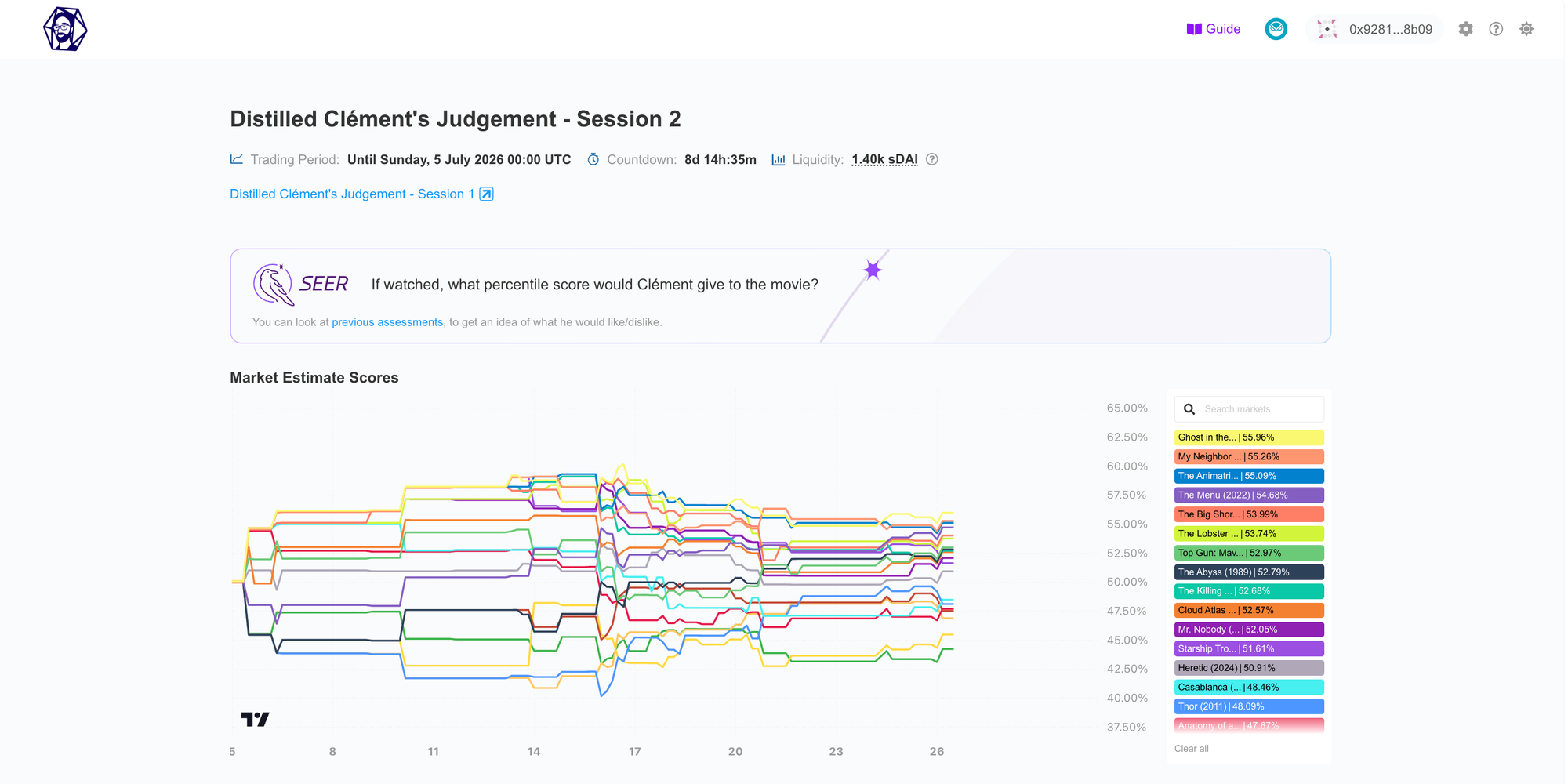
P&L research kicked off the month and shipped a P&L display by mid-month, wired through an API instead of being recomputed in the client. A CSV bug was fixed, and an unsubscribe flow was added.
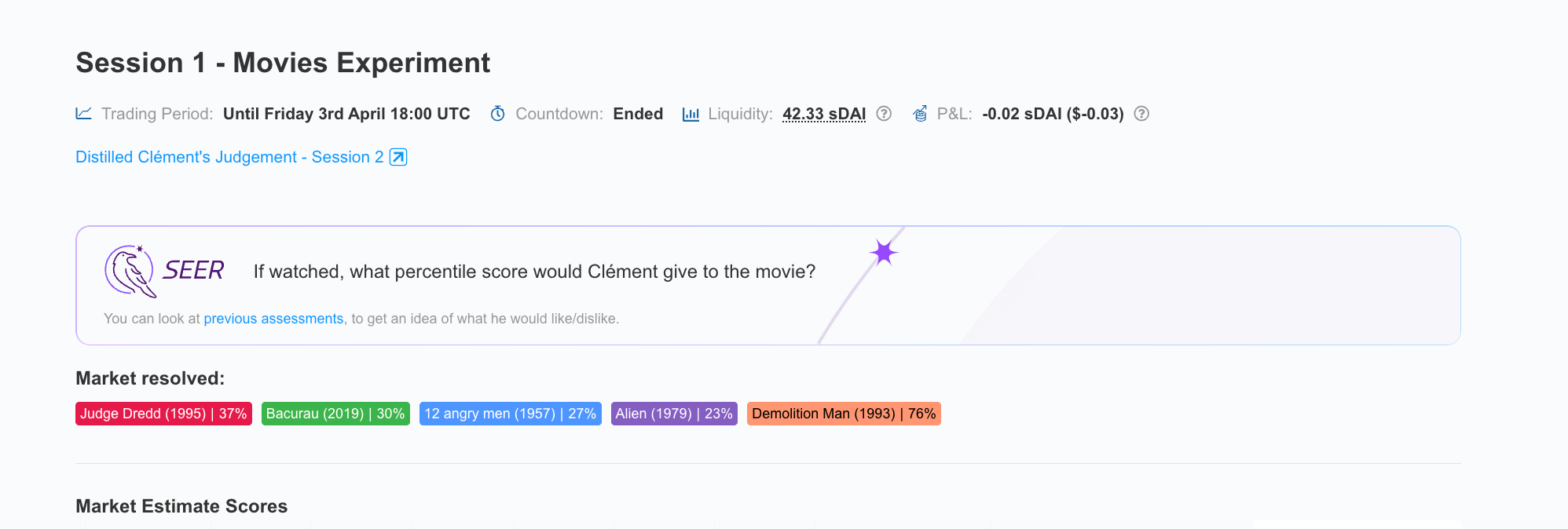
Post-trade quick updates landed; a new chart UI shipped (handling a large number of markets without the congestion), making the navigation easier; and an email UX rework moved into progress.
A risk pricing experiment with a trusted partner was kicked off in parallel, with Figma mockups in progress for an ETH version and a USD version.
A documentation track began for potential prediction market partners, detailing Kleros' role, the dispute resolution process, and a history of arbitrated disputes.
Proof of Humanity V2
PoH V2 continued through security and product work in parallel.
Security changes were applied to the PoH web frontend, reviewed against the broader frontend audit pass, and merged after feedback was addressed. A second round of security fixes followed in the third and fourth weeks.
The team continued referral system development with keeper bot optimization on the backend, with social graph work tracking alongside the broader security pass.
Kleros Website
The old Kleros website was taken down. The Fellows page was updated with a new profile and links to both the All Fellows page and the Profile page.
A separate branding and legal review started, covering logos, wording, and project integrations to ensure that nothing on the website creates a misleading impression about the relationship between Kleros and any external project. That review is being coordinated with the BD team.
Kleros Skills (AI Agents)
The Kleros Skills set, which makes the Kleros protocol agent-readable, continued its rollout at skills.kleros.io. We added CLI and MCP iterations on top of the published skills.
Toward the end of the month, a Shodai experiment was opened, looking at a possible ClawBank integration as a next step for the agentic side.
The Mintlify documentation is also going through a round of tweaks.
Governance: KIP-87
After the May multisig transaction was rejected because the parent parameter pointed to the existing curation court rather than to a child of the General Court, the team submitted a fresh KIP-87 transaction with the parameter corrected. This time the multisig went through, and the new court has been created successfully.
The new venue is a Curation Court on the Gnosis chain (xDai) with hidden voting, giving Curate and Scout governance workflows sealed voting on Gnosis instead of transparent voting on the mainnet.
What's left now is the migration. The team is preparing to move all scout registries (and likely Seer) over to the new court, with the date announced in advance so current jurors have time to unstake from the old court and restake under the new one.
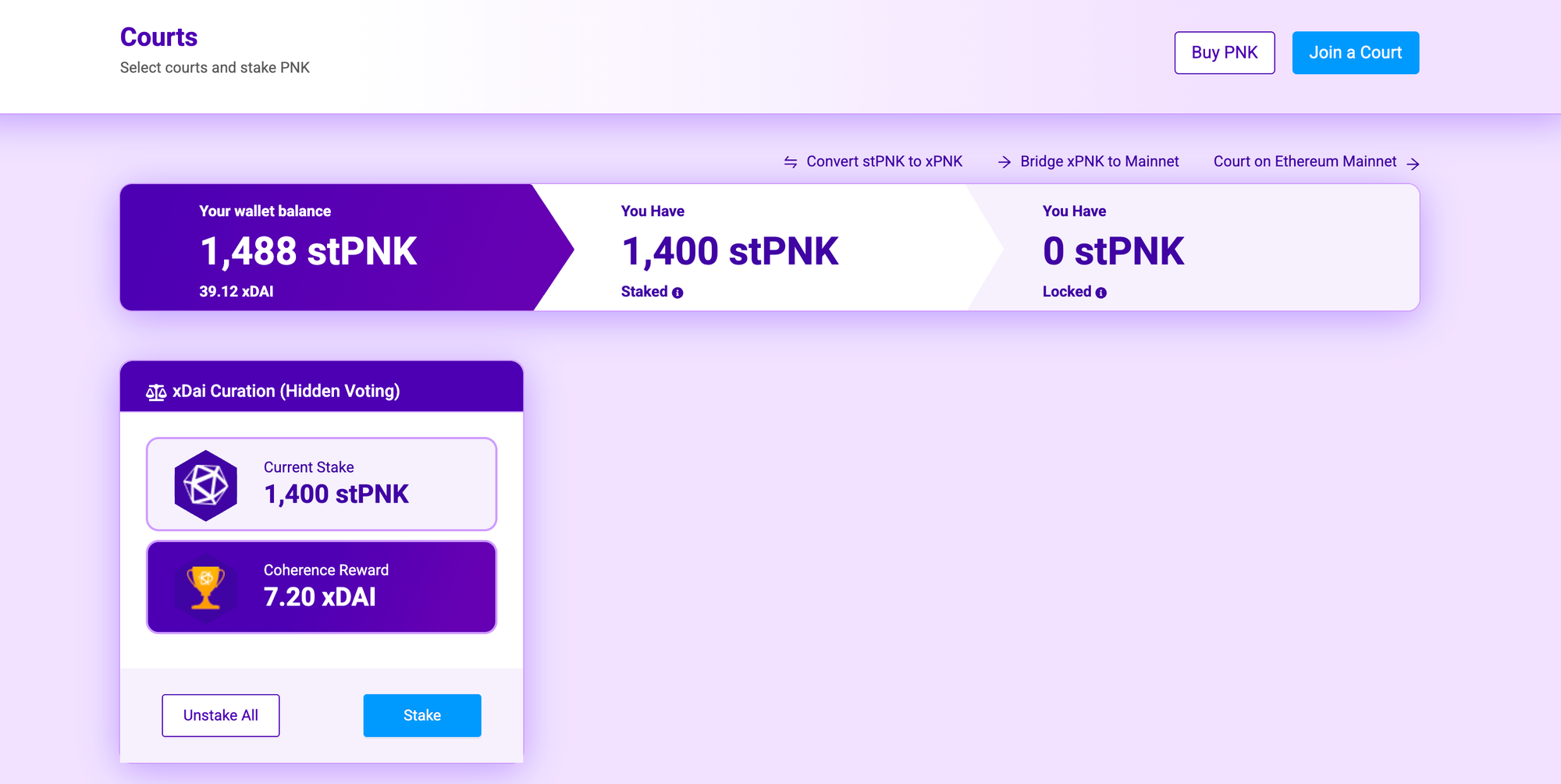
📜 Read the full proposal and join the discussion
forum.kleros.io/t/kip-87-court-proposal-on-gnosis-chain-xdai-curation-court-with-hidden-voting/1427
Security & Infrastructure
Several streams ran in parallel through June.
Frontend security audits were run on all V1, V2, and PoH. PRs from those audits were reviewed, merged, and deployed. The PoH web received its own security changes. Court V2 picked up improved file viewer security as part of the components library work.
The frontend team also kicked off a WalletConnect and Reown project ID evaluation, looking at whether a single project ID on the free starter plan can cover the suite without hitting the monthly active user cap. By the last week of June, the Reown plan evaluation had become a small standalone workstream, and an API key management effort was opened to consolidate where keys are used across the frontends.
Escrow V2 received targeted security fixes deployed to both dev and prod. PoH V2 had a second round of security fixes by the third week of the month.
Atlas had a hack attempt with no harm done, with a follow-up pass on security hardening and observability in the last week. The Alchemy RPC whitelist for the kleros-api was established to prevent abuse on Sepolia from affecting production bots.
What's Next
The Court V2 simplification track moves into the sortition tree and the reward staking mechanism. The forking court specification and the forking dispute kit continue. The DisputeKit frontend refactor and the migration of Court V2 to the latest components library version both stay open.
Vea closes out the new routes work on Arbitrum and Base, publishes the VeaShi scanner after PR feedback, and adds deBridge to the Base, Ethereum, and Arbitrum routes. The fee-handling-for-disputes question moves from open design to an actual decision.
Foresight ships the email UX rework, with new experiments queued behind the movies round 2. Atlas continues with security hardening, observability, and the API key management consolidation. PoH V2 keeper improvements continue alongside the referral system rollout.
Kleros Skills continues to expand from its first published skills into the broader roadmap.